Call Us Now: 504-732-9714
Call Us Now: 504-732-9714

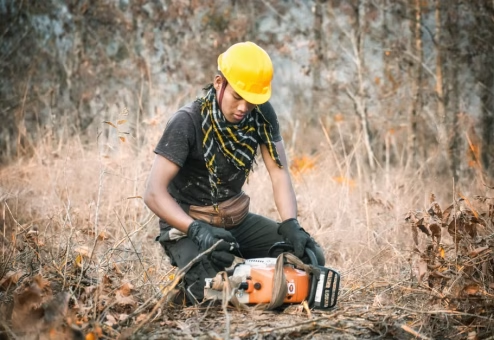
Dead wood removal is the process of identifying and cutting away branches that have died but remain attached to a tree, protecting both the tree and surrounding property from potential hazards. Removing dead branches prevents pest infestations, stops decay from spreading into healthy wood, and redirects the tree’s energy toward productive growth. Whether caused by disease, storm damage, or natural aging, dead wood left unchecked poses serious risks that professional arborists can address safely and efficiently.
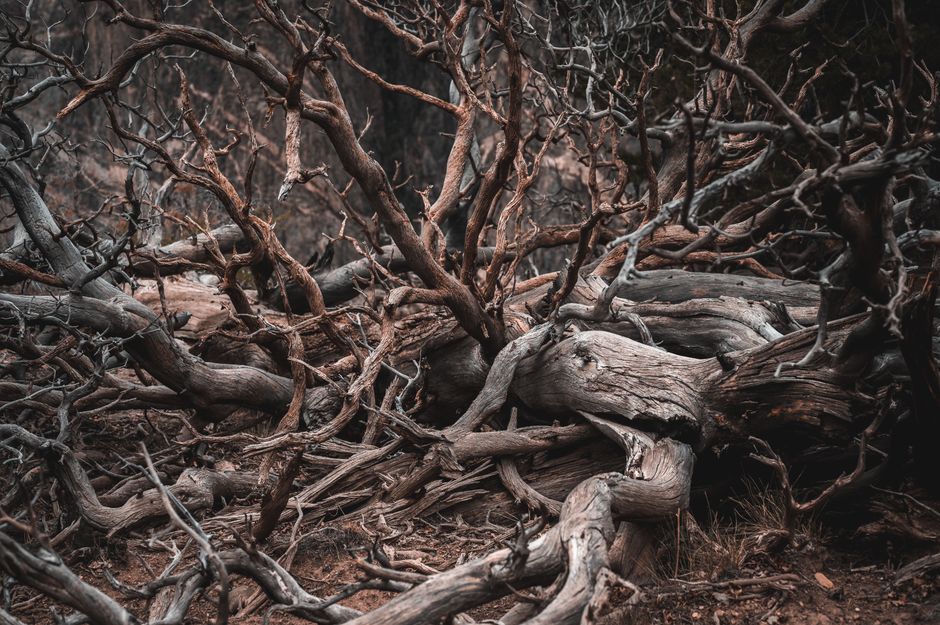
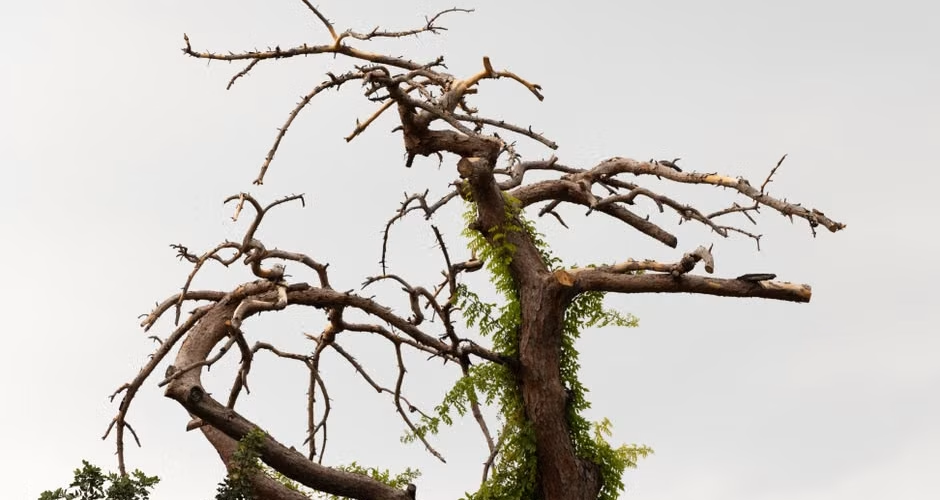
Dead wood refers to branches that have ceased all biological function but remain physically connected to a tree. These branches no longer transport water or nutrients and serve no purpose for the tree’s survival. Over time, they become brittle, lose their bark, and turn into liabilities that can fall without warning.
Trees develop dead branches for a variety of reasons. Natural shedding is the most common cause, as trees redirect resources away from lower or interior branches that receive insufficient sunlight. Disease and fungal infections can kill individual branches or entire sections of the canopy. Storm damage may crack or partially sever branches, cutting off their nutrient supply and leading to dieback. Root problems, soil compaction, and construction damage can also stress a tree enough to cause branch mortality. As trees age, the likelihood of dead wood accumulating increases significantly. If you are unsure whether your trees need attention, Big Easy Tree Cutting can provide a professional assessment.
Learning to spot dead wood early can help you take action before a branch falls and causes injury or property damage. Several practical identification methods can help homeowners recognize the warning signs.
The snap test is one of the simplest approaches. Living branches are flexible and bend without breaking, while dead branches snap cleanly with a dry, cracking sound. Examine the bark closely as well. Healthy branches have firmly attached bark, but dead branches often show peeling, cracked, or missing bark that reveals dry, gray wood underneath. During the growing season, look for branches that fail to produce buds, leaves, or flowers when surrounding branches are thriving. This is one of the clearest signs your tree needs trimming.
Mushroom or fungal growth at the base of a branch is another strong indicator. Fungi colonize decaying wood and their visible fruiting bodies signal that internal rot has already begun. If you notice conks, shelf fungi, or clusters of small mushrooms growing where a branch meets the trunk, that branch is almost certainly dead or dying. For more detailed guidance on assessing tree vitality, read about how to tell if a tree is dead.
Many homeowners underestimate the risks associated with dead branches. The most obvious danger is falling limbs. Dead wood becomes increasingly brittle as it dries out, and even moderate winds or the weight of rain or ice can cause these branches to break loose. When dead branches overhang walkways, driveways, play areas, or rooftops, the potential for injury or property damage is significant.
Beyond the immediate falling hazard, dead wood serves as a magnet for destructive pests. Carpenter ants, termites, and bark beetles are all attracted to decaying wood. Once these insects establish colonies in dead branches, they can migrate into the healthy portions of the tree or even into nearby structures. Termites, in particular, can move from dead tree limbs into your home’s framing and cause thousands of dollars in damage.
Dead branches also function as entry points for disease. Open wounds and decaying tissue allow pathogens and decay fungi to colonize the wood and gradually spread into the trunk and healthy branches. What begins as a single dead limb can eventually compromise the structural integrity of the entire tree, potentially requiring complete tree removal rather than simple maintenance pruning.
Professional dead wood removal involves far more than simply cutting off brown branches. Trained arborists follow specific techniques to protect the tree while eliminating hazardous limbs. Target pruning is the standard approach, where each cut is made just outside the branch collar, the slightly swollen area where the branch connects to the trunk or a larger limb. Cutting at this precise location allows the tree to compartmentalize the wound and seal it naturally with new growth tissue.
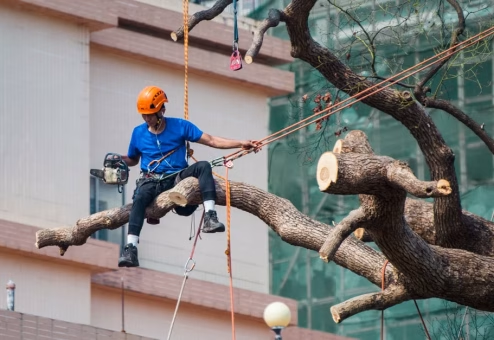
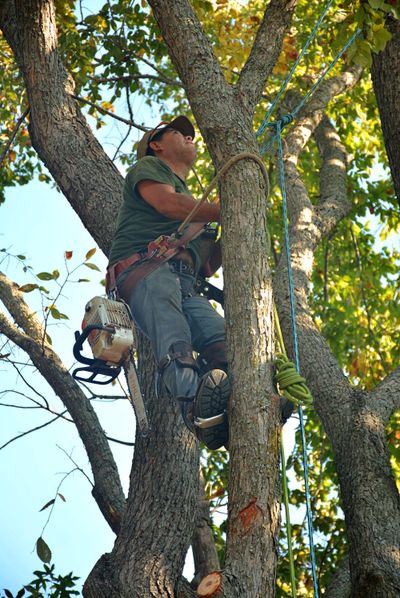
Arborists working on large trees use climbing gear, rigging systems, and sometimes aerial lifts to access branches safely. Dead branches are often lowered on ropes to prevent them from striking lower limbs, structures, or people below. This controlled process is very different from the kind of cuts a homeowner might attempt with a pole saw from the ground. Following proper tree trimming safety tips is critical for anyone working around trees.
During a dead wood removal session, professionals also assess the overall health of the tree. They may recommend complementary services such as crown thinning to improve airflow and light penetration through the canopy or seasonal pruning to maintain proper structure throughout the year.
Removing dead wood delivers measurable benefits to the tree’s long-term health and vitality. When a tree no longer needs to support non-functioning branches, it can redirect energy and resources toward healthy growth. New shoots develop more vigorously, leaves produce more efficiently, and the tree’s overall form improves.
Deadwooding also halts the spread of decay. By removing infected or colonized branches before the decay reaches the trunk, you preserve the tree’s structural integrity. This preventive approach is far less expensive and disruptive than dealing with a tree that has become structurally compromised. Combined with regular tree trimming, dead wood removal keeps your trees healthy, attractive, and safe for decades.
While dead wood removal is beneficial at any time of year, certain situations make it particularly urgent. Before storm season, removing dead branches reduces the amount of debris that high winds can turn into projectiles. In regions prone to hurricanes or severe thunderstorms, pre-season deadwooding is a critical part of property preparation.
Any time dead branches overhang structures, walkways, driveways, or areas where people gather, removal should be treated as a priority. The risk of liability from a falling branch that injures a visitor or damages a neighbor’s property is a serious concern for homeowners. If a tree has already died entirely and poses a broader hazard, removal followed by stump grinding may be the best course of action. Professional stump grinding services eliminate the remaining stump and allow you to reclaim the space.
Do not wait for a dead branch to fall before taking action. Proactive deadwooding protects your family, your property, and the health of your trees. Contact Big Easy Tree Cutting or call 504-732-9714 to schedule an assessment and keep your trees safe and thriving.
Deadwooding is the targeted removal of dead, dying, or diseased branches from a tree, while regular trimming may also involve shaping live growth and controlling canopy size. Deadwooding focuses specifically on eliminating non-functioning wood that poses safety or health risks to the tree. It is often performed as part of a broader tree care maintenance plan.
Most trees benefit from a dead wood inspection and removal every one to three years, depending on the species, age, and overall health of the tree. Fast-growing species and older trees tend to accumulate dead wood more quickly and may require annual attention. Trees in high-traffic areas should be inspected more frequently for safety purposes.
Small dead branches within easy reach from the ground can sometimes be safely pruned by homeowners using proper hand tools and correct cutting techniques. However, any branch that requires a ladder, is near power lines, or is large enough to cause damage when it falls should be handled by a trained professional. Improper cuts can cause additional damage to the tree and create new decay entry points.
No, removing dead wood does not harm a healthy tree when cuts are made correctly at the branch collar. Since the branches are already dead, they provide no benefit to the tree and their removal actually helps by reducing pest habitat and stopping decay from spreading. Proper deadwooding encourages the tree to redirect energy toward vigorous, healthy growth.
Urgent signs include large dead branches hanging over roofs, walkways, or areas where children play, as well as visible cracks where dead limbs attach to the trunk. Fungal growth at branch junctions, hollow sounds when tapping the wood, and branches that sway differently from the rest of the canopy all indicate immediate attention is needed. Storm season approaching also increases the urgency of removing dead branches.
Dead wood provides an ideal habitat for wood-boring insects such as carpenter ants, termites, and bark beetles, which thrive in decaying organic material. Once these pests establish a colony in dead branches, they can spread to healthy parts of the tree and potentially migrate to wooden structures on your property. Removing dead wood eliminates this habitat and reduces the overall pest pressure on your landscape.
 By Admin
  Jul 1, 2026