Tree Trimming Safety in New Orleans for Homeowners
Tree trimming might look straightforward, but it is consistently one of the most dangerous home maintenance activities. Every year, thousands of people are injured in tree trimming accidents, many of them homeowners attempting DIY work. Here are essential safety guidelines every property owner should follow.
Know Your Limits
The most important safety tip is knowing when a job is beyond your skill level. Consider hiring a professional if any of the following apply:
- Branches are higher than you can reach from the ground
- The tree is near power lines (any distance)
- Branches are larger than 4 inches in diameter
- The tree is over a structure, vehicle, or fence
- You would need to use a chainsaw above shoulder height
- The tree shows signs of disease or decay (consider dead wood removal) (unpredictable failure)
- You would need to climb the tree or use a ladder
Ladder Safety: The Biggest Risk
Ladders and tree work are a dangerous combination. Falls from ladders are the leading cause of tree trimming injuries among homeowners.
- Never use a ladder to access tree branches for cutting
- If you must use a ladder, have someone hold it at all times
- Never place a ladder against a branch (branches can shift or break)
- Use a sturdy step ladder on level ground for low work only
- Never lean or overreach from a ladder while holding tools
Power Line Awareness
Electricity can arc through the air and through tree branches, especially when wet. Rules to follow:
- Never trim any tree within 10 feet of a power line
- Assume all power lines are energized and deadly
- If a branch is touching or near a line, call your utility company
- Metal ladders, poles, and tools can conduct electricity through you
- Even after a storm, downed lines in trees can remain energized
Proper Equipment for DIY Trimming
If the job is within safe DIY range (low branches, small cuts, away from hazards):
- Safety glasses: Falling debris and sawdust are inevitable
- Hard hat: Protects against falling branches during cuts
- Gloves: Improves grip and protects hands
- Ear protection: Required when using chainsaws
- Non-slip footwear: Closed-toe boots with good traction
- Sharp tools: Dull blades require more force and are more dangerous
Chainsaw Safety
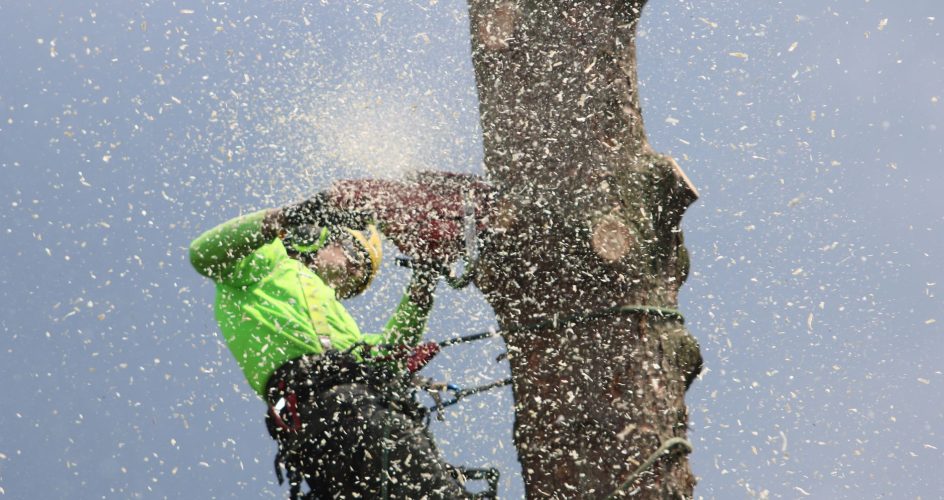
If using a chainsaw (only recommended for experienced users on the ground):
- Never cut above shoulder height with a chainsaw
- Wear chainsaw chaps or leg protection
- Maintain proper chain tension and sharpness
- Never cut with the tip of the bar (causes kickback)
- Clear your escape path before making cuts
- Never work alone with a chainsaw
Falling Branch Awareness
- Always look up before and during cuts
- Plan where the branch will fall before cutting
- Clear people, pets, and vehicles from the drop zone
- Be aware that cut branches can bounce and roll unpredictably
- Branches under tension (bent or weighted) can spring when cut
When to Stop and Call a Professional
If at any point during DIY trimming you feel uncertain, uncomfortable, or the situation becomes more complex than expected, stop. The cost of a professional tree service is always less than a trip to the emergency room or damage to your home.
Want your trees trimmed safely by experienced professionals? Call Big Easy Tree Cutting at 504-732-9714. We have the training, equipment, and insurance to handle any job safely.
Frequently Asked Questions
What is the most common tree trimming injury for homeowners?
Falls from ladders are the leading cause of tree trimming injuries among homeowners. Ladders are inherently unstable when used against tree branches, and the combination of heights, cutting tools, and falling branches makes ladder-based tree work extremely dangerous.
How close to power lines can I safely trim?
Homeowners should never trim any tree within 10 feet of a power line. Electricity can arc through air and through wet or green branches. Only utility companies or licensed line-clearance arborists with specialized training should work near power lines.
Is it safe to use a chainsaw for tree trimming?
Chainsaws should only be used on the ground, never above shoulder height, and only by experienced users with proper safety gear including chaps, eye protection, ear protection, and a hard hat. For any elevated cuts, hire a professional.


 By Admin
  Feb 21, 2026