Call Us Now: 504-732-9714
Call Us Now: 504-732-9714

DIY tree trimming can be a reasonable option for small, low-risk tasks like pruning branches under four inches in diameter on trees you can reach from the ground. However, any job that involves climbing, working near power lines, removing large limbs, or addressing diseased wood should be handled by a professional arborist to protect your safety and the tree’s long-term health.
Every homeowner with a tree in the yard has faced this question: should I trim this myself, or should I call someone? The answer depends on the size of the tree, the location of the branches, your physical ability, and the equipment you own. Some trimming tasks are perfectly safe for a homeowner to handle, while others carry serious risks that make professional help the smarter choice. At Big Easy Tree Cutting, we encourage homeowners to understand both options so they can make informed decisions about their trees.
The core of the DIY tree trimming vs professional discussion comes down to risk and results. A bad cut on a small ornamental branch is a minor mistake. A bad cut on a large structural limb can cause permanent damage to the tree, destroy property below, or send you to the hospital. Knowing where to draw the line is the most important thing any homeowner can learn about tree care.
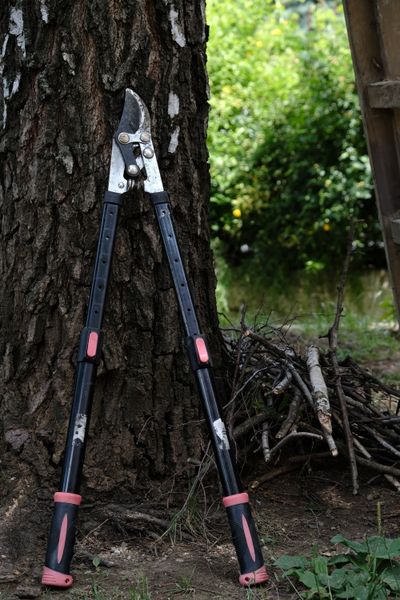
Low-hanging branches that you can reach while standing on the ground are generally fair game. Branches under four inches in diameter on small to medium trees can usually be removed with hand pruners, loppers, or a hand saw without significant risk. Safe DIY tasks include removing dead twigs and suckers, shaping young ornamental trees, cutting back branches that brush against your house at a reachable height, and clearing growth away from walkways. Learning to recognize the signs that your tree needs trimming will help you catch small problems before they grow into big ones.
For DIY pruning, you will need a sharp pair of bypass hand pruners for branches up to one inch, loppers for branches up to two inches, a curved pruning saw for anything up to four inches, and a pole pruner for overhead work from the ground. Always wear safety glasses, gloves, and a hard hat when working beneath a canopy. Keep your tools sharp, because dull blades crush bark and create ragged wounds that invite disease.
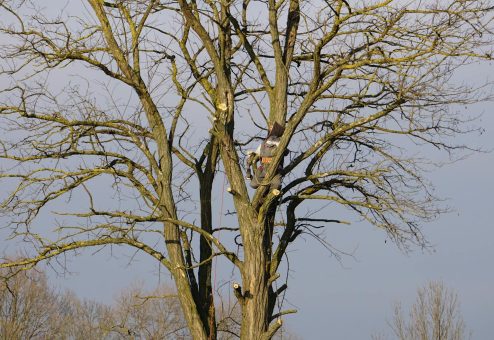
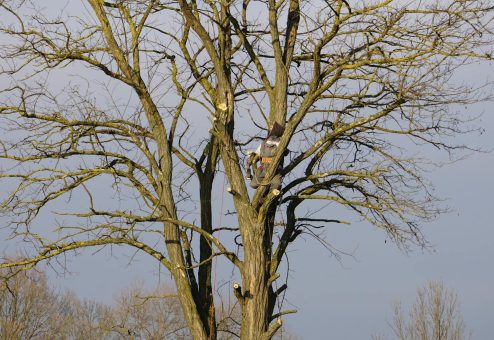
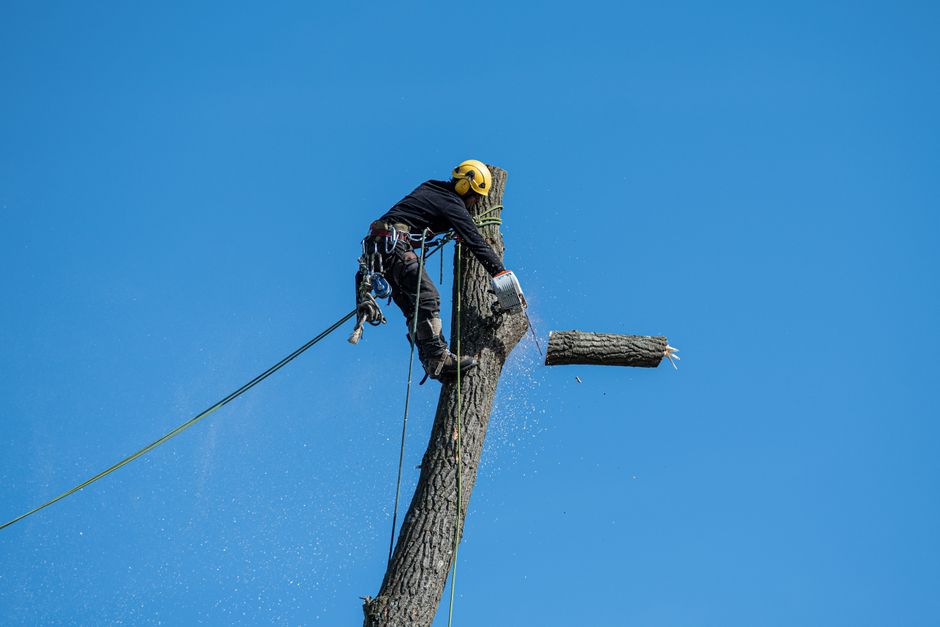
The moment a tree trimming job involves height or hazardous conditions, it crosses the line from a weekend project into professional territory. Any branch that requires a ladder to reach is a strong signal that you need a certified arborist. Ladders and tree work are one of the leading causes of homeowner injuries, and the risk increases on uneven ground or when cutting overhead. Professional tree trimming services include crews trained in safe climbing techniques and equipped with rigging systems that control how cut branches fall.
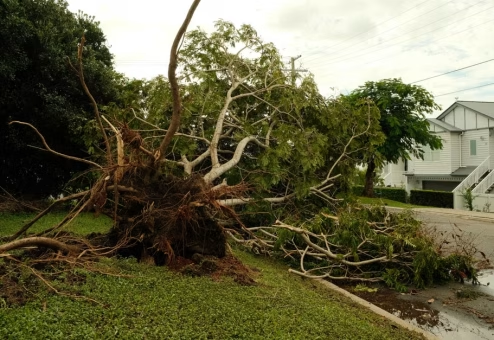
You should also call a professional when branches are located near power lines. Contact with an energized line can be fatal, and even branches that appear to be a safe distance away can arc electricity through moisture in the wood. If a storm has left broken or hanging branches tangled in your tree, emergency tree trimming crews have the experience and equipment to handle these unpredictable situations safely.
Trees showing signs of disease, fungal infection, or structural weakness also require professional evaluation. A homeowner may not recognize the difference between normal bark shedding and a canker that signals internal decay. Removing dead wood from a compromised tree requires careful assessment of which branches are load-bearing and how the remaining structure will respond to the cuts. Getting this wrong can cause a tree to fail entirely.
One of the biggest hidden costs of DIY tree trimming is the damage that improper technique causes to the tree itself. The most common mistake is topping, which involves cutting main branches back to stubs. Topping destroys the tree’s natural structure, triggers a burst of weak regrowth, and leaves large wounds that are slow to heal. A topped tree is more dangerous in the long run because the new growth is poorly attached and prone to breaking. Understanding how often trees should be trimmed and what proper pruning looks like can prevent these costly mistakes.
Flush cuts are another frequent error. Cutting a branch perfectly flush with the trunk removes the branch collar, which contains specialized cells that seal over pruning wounds. Without the collar, the tree cannot close the wound properly, leaving it exposed to decay, insects, and fungal pathogens. The correct technique is to cut just outside the branch collar at a slight angle, preserving the tree’s natural healing mechanism.
Improper timing is also a problem. Pruning certain species during their active growing season or during periods of high disease pressure can introduce infections. Oak wilt, for example, spreads rapidly through fresh pruning wounds during spring and early summer. A professional arborist understands species-specific timing and sterilizes tools between trees to prevent cross-contamination. For more details on safe pruning practices, review these tree trimming safety tips.
On the surface, DIY tree trimming looks like a money saver. A quality set of hand tools costs between $100 and $300, and you can use them for years. Professional tree trimming, depending on the size and number of trees, can range from $200 to over $1,000 per visit. However, the true cost comparison is more complex than it appears.
DIY costs add up when you factor in equipment rental, the value of your time, and the potential for mistakes. A badly pruned tree may need corrective work from a professional later, which often costs more than the original job would have. If a falling branch damages your roof or fence, you are paying for repairs out of pocket. Medical bills and lost income from injuries can far exceed any savings. The comparison between DIY and professional tree removal follows a similar cost pattern.
Professional tree services carry liability insurance and workers’ compensation coverage, which means you are not financially responsible if something goes wrong during the job. Homeowner’s insurance policies often exclude injuries sustained during tree work, leaving you exposed if a job goes badly. For residential tree trimming projects, professional crews deliver faster results with less risk and leave the property clean when they finish.
Sometimes what starts as a trimming question turns into a removal conversation. If more than half of a tree’s canopy is dead, if the trunk shows deep cracks, or if the root system is compromised, trimming will not solve the problem. In these cases, full tree removal may be the safest option. A professional assessment can determine whether a tree can be saved through pruning or whether removal is the responsible choice.
If you are unsure whether your trees need trimming, removal, or just monitoring, contact Big Easy Tree Cutting or call 504-732-9714 for an honest evaluation. We help homeowners make the right call so their trees stay healthy and their property stays safe.
Homeowners can safely prune small branches under four inches in diameter that are reachable from the ground using hand pruners, loppers, or a pole saw. Tasks like removing dead twigs, trimming suckers, and shaping young ornamental trees are generally low-risk when done with sharp tools and proper protective gear.
If the job involves climbing, using a ladder, working near power lines, removing branches larger than four inches, or addressing a diseased or structurally compromised tree, you should hire a professional. Any situation where a falling branch could strike a structure, vehicle, or person also warrants professional equipment and expertise.
The three-cut method prevents bark tearing when removing branches. The first cut is an undercut about 12 to 18 inches from the trunk, the second is a top cut slightly farther out to remove the branch weight, and the third is a clean final cut just outside the branch collar. This technique ensures a smooth wound that the tree can seal properly.
Yes, severe topping, flush cuts, and removing too much of the canopy at once can seriously weaken or kill a tree over time. Improper cuts create entry points for disease and decay, and excessive pruning depletes the tree’s energy reserves. Even trees that survive bad pruning often develop structural problems that make them hazardous.
Most homeowner’s insurance policies do not cover injuries you sustain while performing maintenance work on your own property. Medical bills, lost wages, and rehabilitation costs from a fall or chainsaw accident would likely come out of pocket. Professional tree companies carry their own liability and workers’ compensation insurance to cover their crews.
Professional tree trimming typically costs between $200 and $1,000 or more per visit depending on tree size, number of trees, and job complexity. DIY tool costs range from $100 to $300 for a basic set. However, when you account for time, equipment rental for bigger jobs, and the financial risk of mistakes or injuries, professional service often provides better overall value.
 By Admin
  Jun 6, 2026