Call Us Now: 504-732-9714
Call Us Now: 504-732-9714

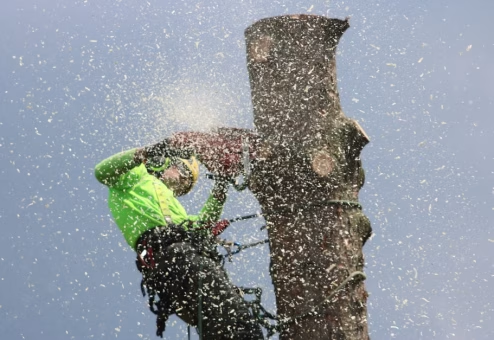
Living in New Orleans means living with hurricanes. While you cannot control the weather, you can control how prepared your trees are when storms arrive. Proper tree trimming is one of the most effective and affordable ways to protect your home and family during hurricane season.
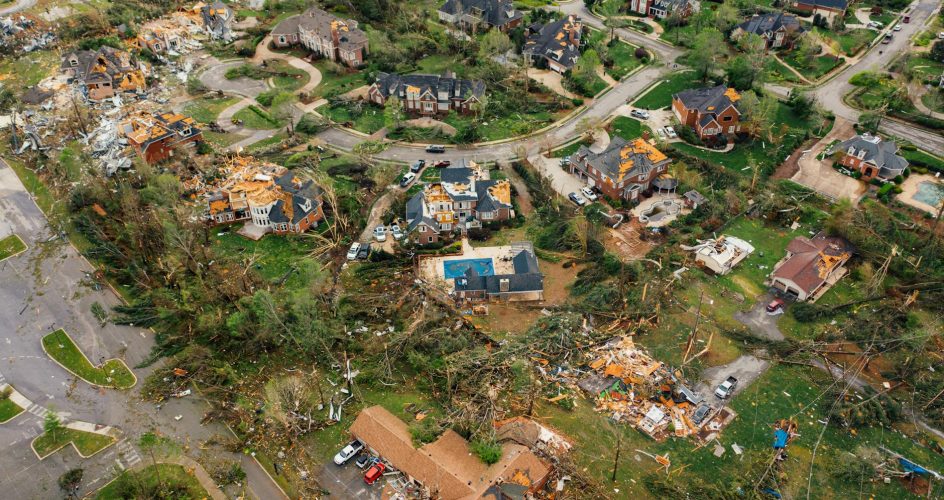
During hurricanes and severe storms, trees damage property in several ways:
A dense canopy acts like a sail, catching enormous amounts of wind force. Crown thinning removes 15 to 20 percent of interior branches, allowing wind to pass through rather than push against the tree. Studies show properly thinned trees experience significantly less mechanical stress during high winds.
Dead branches are the first to break loose in any storm. Removing them before hurricane season eliminates a major source of flying debris that damages windows, vehicles, and neighboring properties.
Maintaining adequate separation between branches and your home (minimum 5 to 10 feet recommended) means even if branches whip in the wind, they cannot strike your roof, siding, or windows.
Extended branches carrying excessive weight at their tips are lever arms waiting to break. Reducing end-weight on long limbs significantly reduces breakage risk during sustained winds.
Correcting weak branch unions, removing co-dominant stems, and establishing strong central leaders in younger trees prevents the catastrophic splits that cause the worst storm damage.
Hurricane season in the Atlantic runs from June 1 through November 30. The ideal window for storm-preparation trimming is:
Do not wait until a storm is forecasted. Arborists are overwhelmed with last-minute requests, and rushed work is never as thorough as planned maintenance.
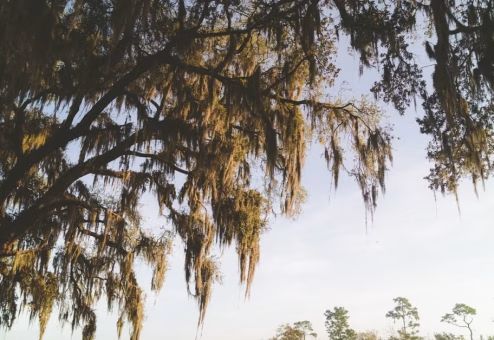
Note: Live Oaks, when properly maintained, are remarkably hurricane-resistant thanks to their dense wood and spreading form.
Hurricane season is always coming. Protect your home now. Call Big Easy Tree Cutting at 504-732-9714 to schedule your pre-storm tree assessment.
Schedule major structural work in January through March and final cleanup trimming by May. Do not wait until a storm is forecasted as arborists will be overwhelmed with calls. Proactive scheduling ensures thorough, quality work.
No technique can guarantee survival against a major hurricane. However, properly maintained trees are significantly less likely to fail. Crown thinning, dead wood removal, and structural pruning dramatically reduce the probability and severity of storm damage.
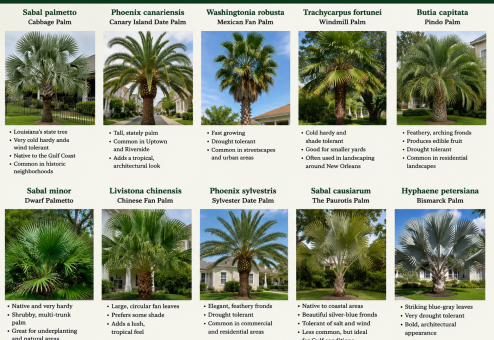
Palm trees, especially Sabal Palmettos, are among the most hurricane-resistant trees. Their flexible trunks and streamlined fronds allow them to bend with the wind. However, they can still shed loose fronds that become projectiles, so pre-storm trimming is still recommended.
 By Admin
  Feb 14, 2026