Call Us Now: 504-732-9714
Call Us Now: 504-732-9714

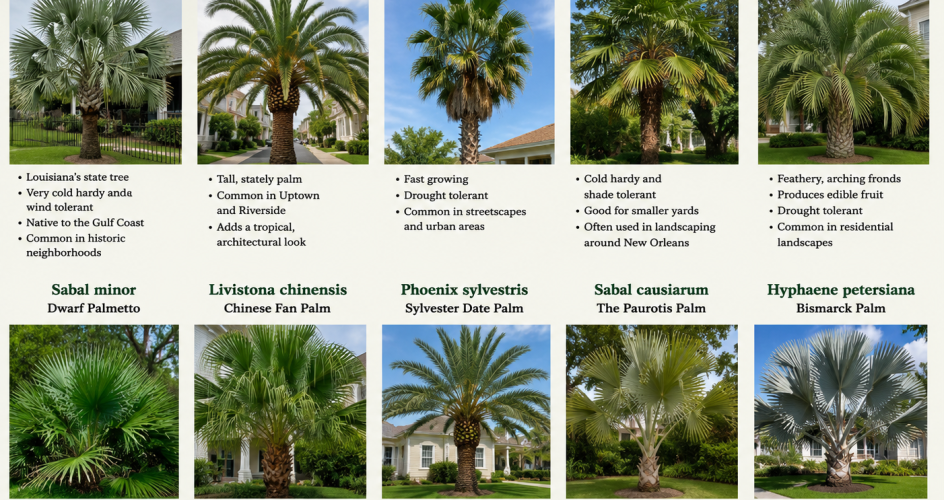
Palm trees are a signature part of the New Orleans landscape, adding tropical character to homes and businesses throughout the city. But palm trimming requires a fundamentally different approach than trimming hardwood trees. Done wrong, it can permanently disfigure or even kill your palm.
Palms are not true trees in the botanical sense. They are monocots, more closely related to grasses than to oaks or maples. This means:
The most important rule in palm trimming: never remove fronds that grow above the horizontal line (imagine a clock face from 9 to 3). Only remove fronds pointing below horizontal, plus any that are brown, yellow, or dead.
This preserves enough green fronds for adequate photosynthesis and prevents the dangerous condition called pencil pointing, where the trunk narrows at the top due to malnutrition.
Palms can be trimmed year-round in our climate, but the best timing is:
Avoid trimming during freezing events, as fresh cuts are more susceptible to cold damage.
Small palms under 10 to 15 feet can often be maintained by homeowners with a pole saw and some knowledge. However, most established palms in New Orleans reach heights of 30 to 80 feet, making professional trimming with proper equipment essential for safety.
Need your palms trimmed the right way? Call Big Easy Tree Cutting at 504-732-9714 for professional palm care that keeps your trees healthy and your property looking great.
No. Climbing spikes should never be used on palms. Unlike hardwood trees, palm trunks do not heal from puncture wounds. Spike holes remain permanently, creating entry points for disease and insects. Professional palm trimmers use bucket trucks or spike-free climbing methods.
A healthy palm should retain all fronds growing at or above the horizontal plane (9 o’clock to 3 o’clock on a clock face). This typically means keeping a full, round canopy of green fronds. The more green fronds a palm has, the healthier it is.
Untrimmed palms with dense skirts of dead fronds, accumulated boots, and fruit clusters can provide shelter and food for rats and other pests. Regular trimming removes these harborage areas and reduces pest attraction.
 By Admin
  Jan 31, 2026