Call Us Now: 504-732-9714
Call Us Now: 504-732-9714

Trees do not always announce when they need attention. But if you know what to look for, the warning signs are clear. Ignoring these signals can lead to property damage, personal injury, or the decline and death of a tree that could have been saved with timely trimming.
If you notice any of these, do not wait for your next scheduled trimming. Call a professional tree trimming service promptly.
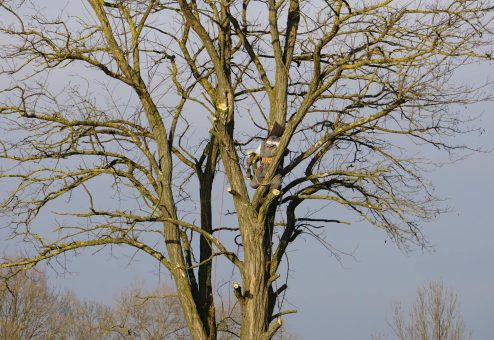
Dead branches are unpredictable. Our dead wood removal service eliminates these hazards. They can fall in calm weather without any warning. Look for branches with no leaves during the growing season, peeling bark, or a brittle, dry appearance. Hanging branches (sometimes called widow makers) are especially dangerous.
Branches in contact with your home create multiple problems. They scrape and damage exterior surfaces, provide a bridge for pests like ants and rodents, trap moisture against your home, and can punch through roofing during wind events.
Visible cracks in branch unions or along major limbs indicate structural failure is possible. V-shaped branch unions are weaker than U-shaped ones and are more prone to splitting, especially under the weight of heavy foliage or during storms.
Trees growing into or near power lines create fire risks and outage hazards. While utility companies handle lines on public right-of-way, branches from your trees that could reach lines on your property are your responsibility.
Fungi growing on branches, trunk, or at the base of the tree indicate internal decay. The visible mushroom is just the fruiting body; the decay inside may be extensive. An arborist can assess how much structural integrity remains.
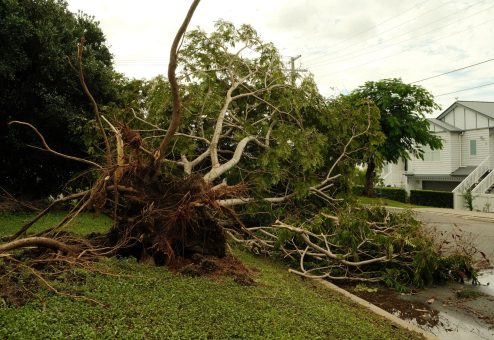
If your tree has become so dense that little light passes through, it may be harboring moisture-related diseases. Dense canopies also create more wind resistance during storms, increasing the risk of uprooting or major branch failure.
When branches grow into each other, they create wounds where bark is rubbed away. These open wounds become entry points for disease and insects. Left unchecked, rubbing branches weaken both limbs involved.
A tree that has significantly more weight on one side is structurally unbalanced. This imbalance puts stress on the trunk and root system, making the tree more likely to lean or fail. Corrective trimming can redistribute weight before it becomes critical.
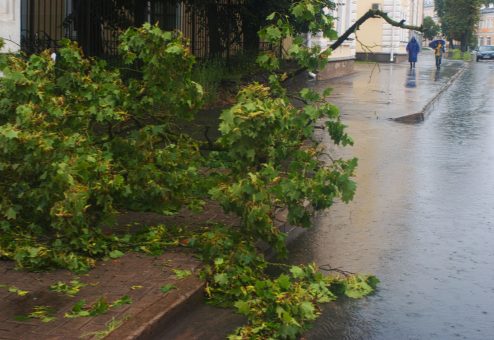
Low-hanging branches blocking driveways, sidewalks, or sightlines are not just inconvenient. They can create safety hazards for pedestrians and drivers, and may violate local ordinances requiring minimum clearance over public pathways.
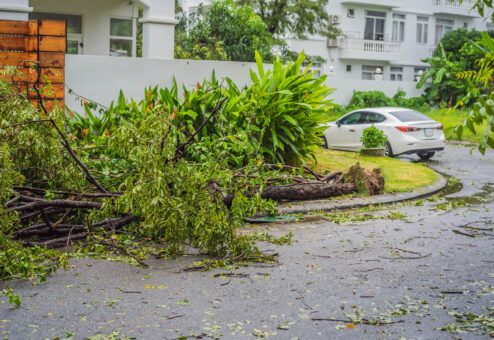
If hurricane season is approaching and your trees have not been trimmed in over two years, that is your signal. Properly trimmed trees withstand storms far better than neglected ones. Do not wait for the first named storm to act.
If you have spotted one or more of these signs, the next step is simple: get a professional evaluation. Contact Big Easy Tree Cutting for a free inspection. A certified arborist can tell you exactly what your tree needs, whether it is a simple trim, structural pruning, or in some cases, removal.
See warning signs on your trees? Call Big Easy Tree Cutting at 504-732-9714 for a free inspection and honest recommendation.
A slight lean is natural for many trees, but a sudden new lean after a storm may indicate root failure and is a serious concern. Weight reduction on the leaning side can sometimes help, but a professional assessment is essential to determine whether the tree is safe to keep.
Yes. Mushrooms or fungal conks on a tree indicate internal decay. The visible fungi are just the fruiting body; the rot inside may be extensive. Have an arborist evaluate the structural integrity of the tree as soon as possible.
Yes. Even healthy-looking trees accumulate dead wood, develop crossing branches, and grow into structures over time. An arborist inspection may reveal issues that are not visible from the ground, such as weak branch unions or early signs of disease hidden in the upper canopy.

 By Admin
  Jan 17, 2026