 By Admin
  Jul 27, 2026
 Why Trees Develop Dead Branches
All trees produce some deadwood as part of a natural process called self-thinning. As a tree grows taller, interior and lower branches that no longer receive enough sunlight stop producing energy through photosynthesis. The tree stops sending nutrients to those branches and lets them die off, redirecting resources to the upper canopy where growth is more efficient. This is normal and does not, by itself, mean the tree is in trouble.
The concern grows when dead branches appear across large sections of the canopy, cluster in one area, or show up alongside other signs of decline. At that point, you are likely dealing with one of several more serious causes. The team at Big Easy Tree Cutting sees these problems regularly, and they rarely improve on their own.
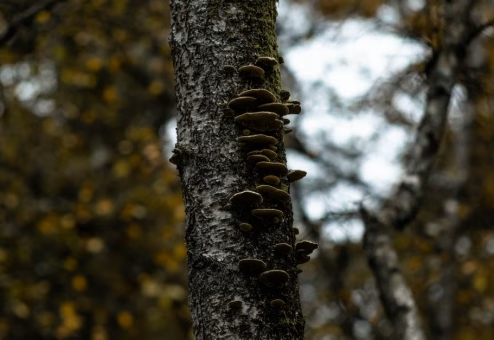
Disease. Vascular diseases, most of them caused by fungi, block the flow of water and nutrients through the tree’s vascular system. When a branch can no longer receive what it needs, it dies back from the tips inward. Cankers, which are localized dead zones in the bark, are another common culprit. A canker caused by a fungal pathogen can girdle a branch or trunk section entirely, cutting off circulation and killing everything above it.
Drought and water stress. When a tree cannot draw enough water from the soil, it begins shedding branches to reduce the surface area it has to support. Drought stress is one of the fastest routes to widespread deadwood, especially in trees that are already weakened by other factors. Even a season or two of below-average rainfall can trigger significant branch dieback.
Pest damage. Boring insects, scale, and certain beetles damage the cambium layer just beneath the bark. Once that layer is compromised, the branch above the damage point loses its supply line and dies. Infestations often leave subtle clues like small holes, sawdust-like frass, or unusual bark discoloration before the branch shows outward signs of death.
Poor pruning and flush cuts. When a branch is removed by cutting flush against the trunk, the branch collar, which is a ring of specialized cells at the base of every branch, is destroyed. The branch collar is where the tree forms barrier tissue to close wounds and prevent decay from spreading inward. Removing it leaves the trunk exposed and makes it far harder for the tree to compartmentalize the damage. This matters because of a process arborists call CODIT, or Compartmentalization of Decay in Trees. Developed by plant pathologist Alex Shigo, CODIT describes how trees form chemical and physical walls around injured tissue to isolate decay. Flush cuts short-circuit that defense, leaving the trunk vulnerable to decay fungi that can hollow a tree from the inside out.
Age and structural loading. Older trees accumulate deadwood naturally. Large-diameter branches that have been dead for years become brittle and lose the flexibility that keeps living wood from snapping. Their weight also increases relative to their weakening attachment, making them progressively more dangerous over time.
If you are seeing dead branches and are not sure what is driving them, reading Signs a Tree Needs Trimming is a good place to start evaluating the full picture.
The Specific Danger Signs You Cannot Ignore
Not all dead branches carry the same risk, but several patterns should put you on high alert.
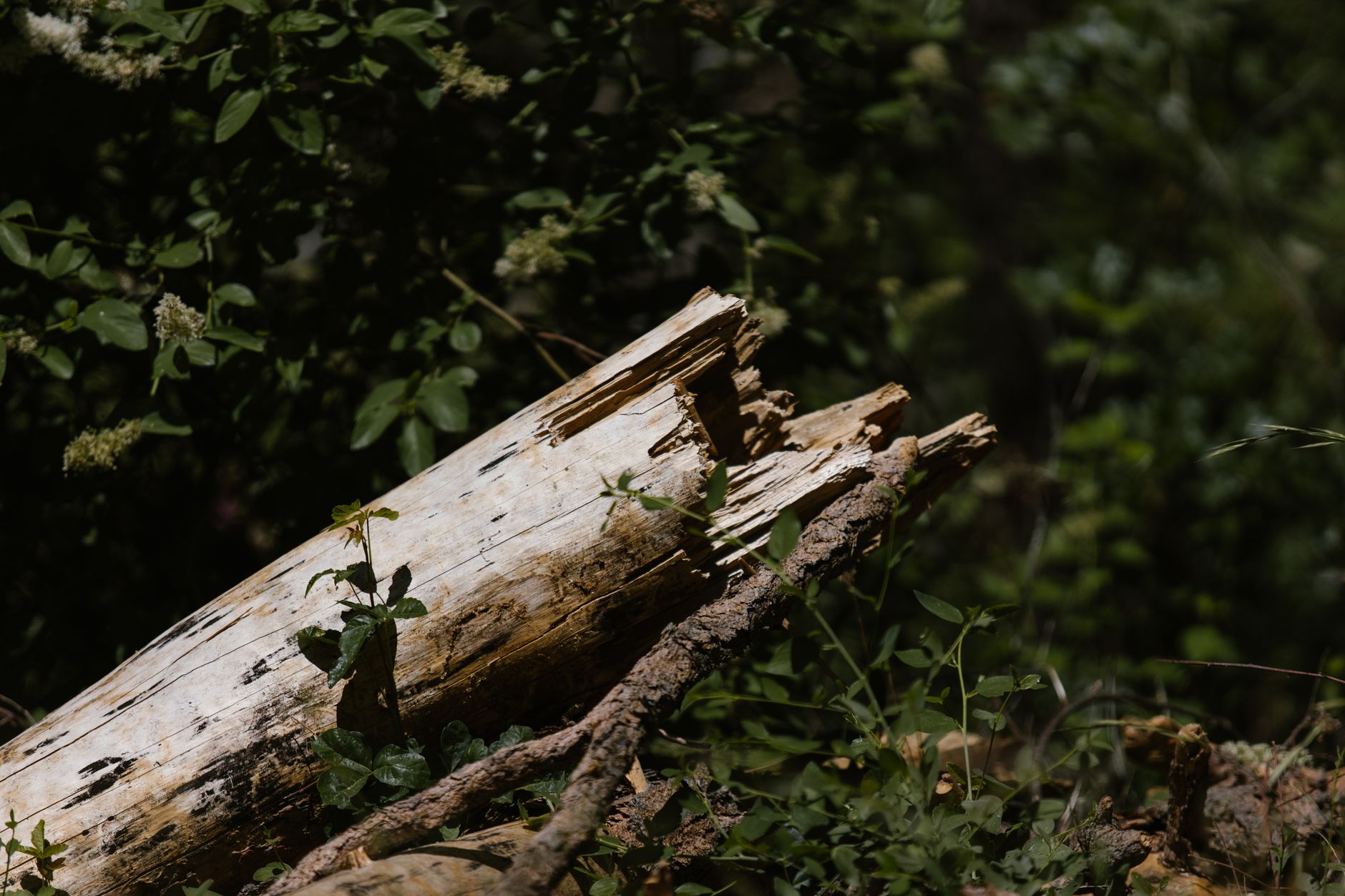
Widow-makers. In forestry and arboriculture, a widow-maker is a dead branch or broken treetop that is still hanging in the canopy, suspended by other branches or by the notch where it broke. These limbs look stable but can dislodge without wind or warning. Their weight is concentrated, and because the wood is already dead and brittle, the fall is sudden. A widow-maker does not lean or creak before it drops. It simply falls. If you can see a large dead limb sitting in the canopy that appears disconnected from the trunk below the break point, that is a widow-maker, and it needs to come down immediately. This is not a weekend project for a ladder and a handsaw. Professional equipment and trained climbers are required.
Bark patterns that reveal internal problems. Living bark is pliable and continuous. Dead bark peels, cracks, and separates from the wood beneath it, often revealing a dry, gray or tan cambium layer instead of the moist green tissue you find in a healthy branch. Cankers show up as dark, sunken, or discolored patches that may weep sap or develop a cracked margin where healthy tissue meets dead tissue. Any branch showing these patterns at or near where it connects to the trunk deserves close attention.
Cracks at attachment points and included bark. Where a branch meets the trunk, look for tight, V-shaped crotches rather than broad U-shaped ones. Tight crotches are associated with codominant stems, which are two stems of roughly equal diameter competing for the same vertical space. As both stems grow, bark sometimes becomes embedded between them rather than forming a wood-to-wood connection. This is called included bark. Included bark creates a seam, not a joint, and that seam is structurally weak. Research has shown it can reduce attachment strength by 14 to 20 percent compared to codominant stems without it. When a large dead branch originates from a codominant stem with included bark, the risk of a sudden, complete failure is significantly elevated.
Understanding the full scope of structural risks connects directly to Why You Should Never Top a Tree, since topping creates exactly the kind of weakly attached regrowth that leads to these problems.
What Happens When You Leave Dead Branches in Place
The most immediate consequence is physical danger. Dead branches do not have to be enormous to cause serious injury. Even a branch of modest size falling from height carries enough force to damage a roof, shatter a windshield, or injure anyone below. The liability implications of a known hazard on your property are also real.
Beyond the safety issue, leaving deadwood in place allows decay to progress. Dead wood does not stay where it is inside a tree’s CODIT defense system. Decay fungi colonize dead tissue and, if the CODIT walls are compromised by disease or previous poor pruning, that decay can migrate into the trunk. A tree that appears healthy from a distance may be hollow at its core, with the only indication being the deadwood you can see from the yard.
Dead branches also create entry points for secondary pests. Bark beetles and boring insects strongly prefer stressed or dead wood, and an unmanaged dead branch can become a staging ground for an infestation that spreads to living tissue. Removing deadwood promptly as part of a consistent trimming schedule is one of the most effective ways to reduce pest pressure across the entire tree. You can read more about why this matters in 8 Benefits of Regular Tree Trimming.
How Dead Branch Removal Works
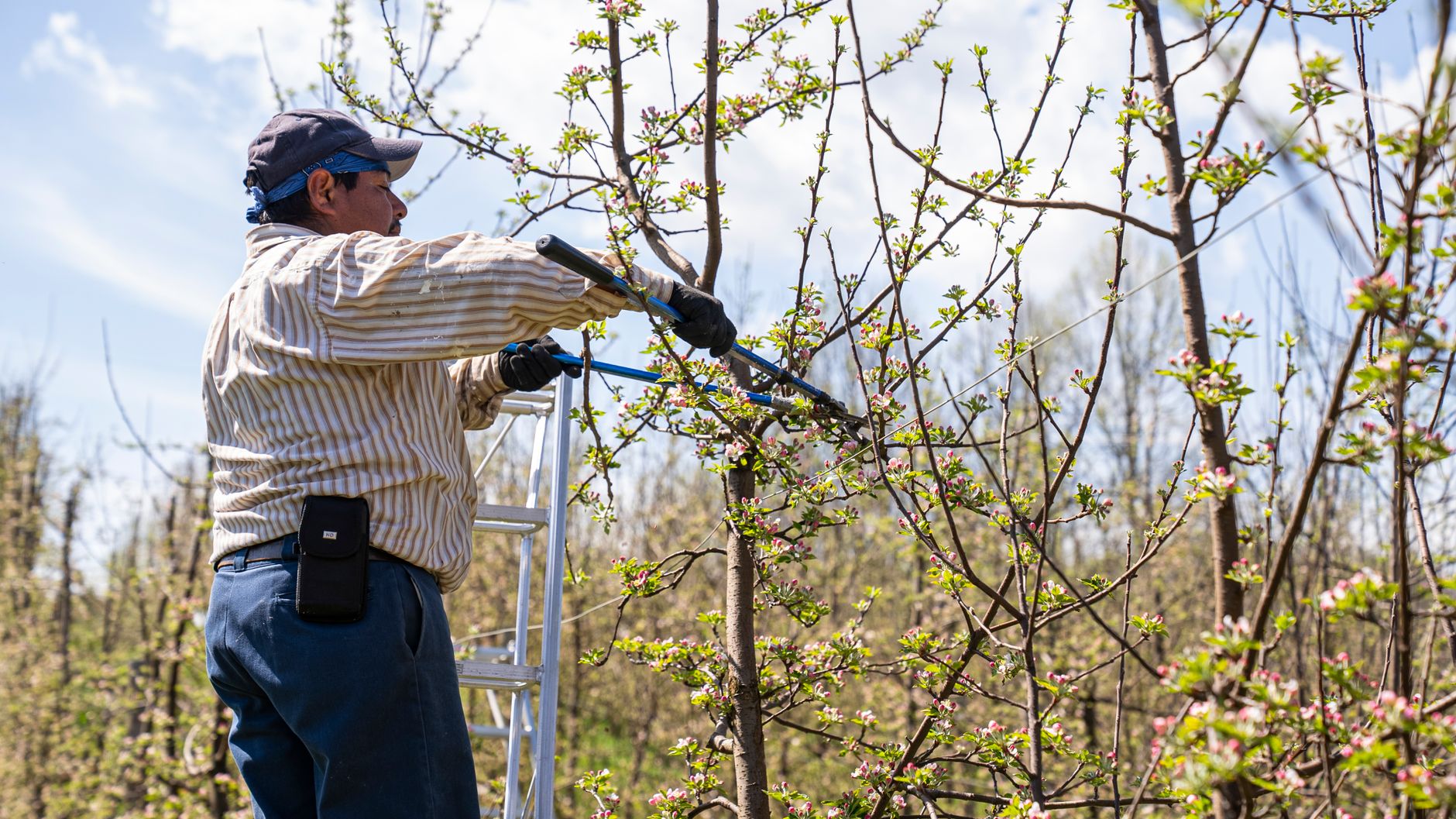
Proper dead wood removal is not simply cutting off what looks dead. A trained arborist evaluates each branch for the extent of decay, the attachment point’s structural integrity, and how far the deadwood extends into the parent stem. The goal is to make cuts at the branch collar without removing it, allowing the tree to close the wound properly and wall off any remaining decay using its CODIT defenses.
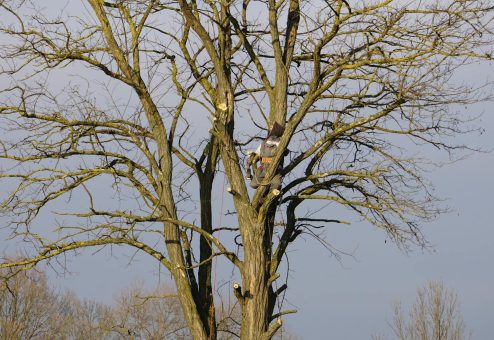
For large dead branches, especially widow-makers or branches over high-traffic areas, a certified arborist will use ropes and rigging to control the descent of each section rather than dropping it freely. This protects structures and people below and preserves the health of surrounding branches that would otherwise be damaged by impact.
When a tree has lost a significant portion of its canopy to deadwood, or when the dead branches trace back to trunk decay or codominant stem failure, the arborist may recommend full tree removal rather than pruning alone. This is particularly true when the structural integrity of the trunk has been compromised to the point where no amount of crown reduction would make the tree safe. Keeping a doomed tree standing to avoid the cost of removal is a false economy when that tree could fall on a structure or a person.
Regular tree trimming on a consistent schedule, ideally every one to two years for mature trees, is the most cost-effective way to catch dead branches while they are still manageable and before they become widow-makers or vectors for deeper decay. Pair that with an understanding of the Tree Trimming Safety Tips professionals follow and you have a solid framework for keeping your trees healthy and your property safe.
Get a Free Estimate in New Orleans
If you have spotted dead branches, hanging limbs, or canopy sections that look wrong, do not wait for a storm to make the decision for you. The team at Big Easy Tree Cutting offers free estimates and professional assessments for trees throughout the New Orleans area. Call us at (504) 732-9714 or visit our contact page to schedule your consultation today.
Frequently Asked Questions
Are dead branches on a tree always a sign something is wrong?
Not always. Some deadwood in the lower, interior canopy is a normal result of natural self-thinning as a tree prioritizes energy toward sunlight-receiving growth. However, dead branches appearing across the upper canopy, clustering in a specific area, or growing alongside other symptoms like bark abnormalities or canopy dieback are signs that disease, pests, drought stress, or structural failure may be involved and should be evaluated by a professional.
How can I tell if a branch is dead or just dormant?
The scratch test is the most reliable field check: use your thumbnail or a pocketknife to scratch away a small patch of outer bark near the tip of the branch. If the tissue beneath is green and slightly moist, the branch is alive. If it is brown, dry, or tan all the way through, the branch is dead. Dead branches also tend to lack buds, have peeling or cracked bark, and snap cleanly rather than bending when flexed.
What is a widow-maker and why is it dangerous?
A widow-maker is a dead branch or broken treetop that remains suspended in the canopy, held up by surrounding branches or a notch in the trunk. Because the wood is already dead and brittle, it can dislodge and fall with no visible warning, even on a calm day. They are called widow-makers because of the fatalities they have caused in forestry and logging, and they should only be removed by trained professionals using appropriate rigging equipment.
Does removing dead branches actually help the tree?
Yes, in most cases. Removing dead branches eliminates entry points for decay fungi and boring insects that prefer dead wood. It also reduces the structural load on attachment points that may already be weakened, lowering the risk of a larger failure. Proper cuts at the branch collar preserve the tree’s ability to use its CODIT defense system to close wounds and isolate any remaining decay.
When should I remove the whole tree instead of just the dead branches?
When deadwood makes up a large portion of the canopy, when trunk decay has advanced beyond what CODIT barriers can contain, or when codominant stems with included bark are large and failing, full tree removal may be safer and more cost-effective than ongoing pruning. A certified arborist can assess the tree’s structural integrity and give you an honest evaluation of whether removal is the right call.