Call Us Now: 504-732-9714
Call Us Now: 504-732-9714

Whether a towering oak is threatening your roofline or a storm-damaged cypress needs to come down before hurricane season, one of the first questions New Orleans homeowners ask is simple: how much is this going to cost?
Tree removal pricing isn’t one-size-fits-all. The final number depends on everything from the height and species of the tree to how close it sits to your house or power lines. Understanding these cost factors ahead of time helps you set a realistic budget, avoid surprise charges, and make confident decisions when it’s time to hire a professional.
Here’s what New Orleans homeowners should expect to pay for tree removal in 2026 and the key variables that shape the estimate.
 In the New Orleans metro area, most homeowners pay somewhere between $400 and $1,900 for a single tree removal, with the local average landing around $1,100. Straightforward removals of smaller trees on open lots tend to fall on the lower end, while large or hard-to-reach trees push costs higher.
For a basic removal with minimal complications, local pricing typically starts in the $475 to $650 range. That usually covers cutting the tree down, sectioning the trunk, and hauling away the debris. However, if the tree is tall, located near structures, or requires specialized equipment like a crane, the price can climb well above that baseline.
Nationally, tree removal averages range from roughly $200 for a very small tree to $2,000 or more for a large one. New Orleans tends to sit slightly above the national average because of factors unique to the region, including dense urban lots, aging live oaks with massive canopies, and high demand for service during storm recovery periods.
No two tree removal jobs are exactly alike. Here are the biggest variables that influence what you’ll pay.
Height is the single biggest cost driver. The taller the tree, the more labor, equipment, and time are required to bring it down safely. As a general rule, expect to pay roughly $12 to $15 per foot of height. A 30-foot crepe myrtle will obviously cost far less than an 80-foot live oak.
Small trees under 30 feet are generally the most affordable to remove. Medium trees in the 30- to 60-foot range represent the bulk of residential removals in New Orleans. Large trees over 60 feet, especially mature oaks and pecans, require the most planning and typically come with the highest price tag.
A tree’s trunk diameter, measured at chest height, directly affects how long it takes to fell and section. Trees with trunks wider than 24 inches require heavier cutting equipment and more labor hours. Wide trunks also produce more wood volume, which increases debris hauling costs.
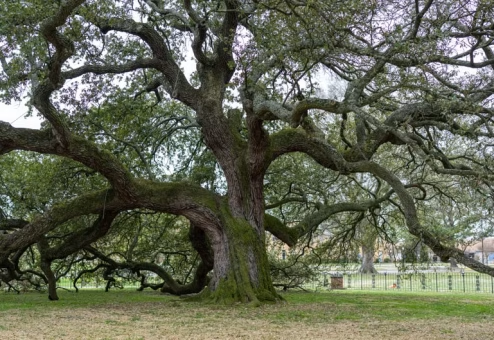
New Orleans yards are full of species that each present unique removal challenges. Live oaks are the city’s most iconic trees, but their dense, heavy wood and sprawling branch structure make them among the most expensive to remove. Bald cypress trees often grow in wet soils, adding complexity to access and equipment staging. Pine trees are generally easier to remove because of their softer wood and more uniform shape, keeping costs lower. Palm trees tend to be the least expensive due to their relatively simple structure.
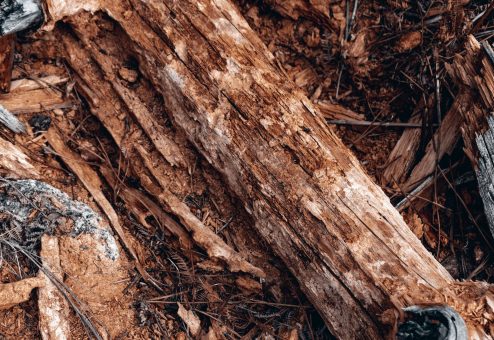
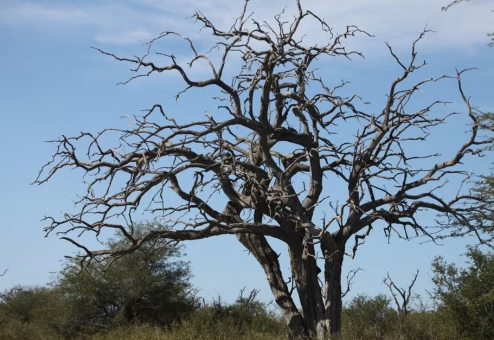
You might assume a dead or dying tree would be cheaper to remove since it’s already on its way out. In reality, dead trees are often more expensive because they’re unpredictable. Rotting wood can crack or fall without warning, forcing crews to take extra precautions. Diseased trees may also require special handling to prevent spreading infections to nearby healthy trees.
Trees growing close to your home, garage, fence, or power lines cost more to remove because of the precision required. Crews may need to use ropes, rigging systems, or a crane to lower branches and trunk sections piece by piece instead of felling the tree in one cut. If the tree is near active power lines, coordination with Entergy New Orleans may be necessary, which adds time and cost to the project.
If the tree is in a backyard with no gate access for heavy equipment, or if the ground is soft and soggy (a common issue in many New Orleans neighborhoods), crews may need to carry debris by hand or use smaller equipment, increasing labor time and cost.
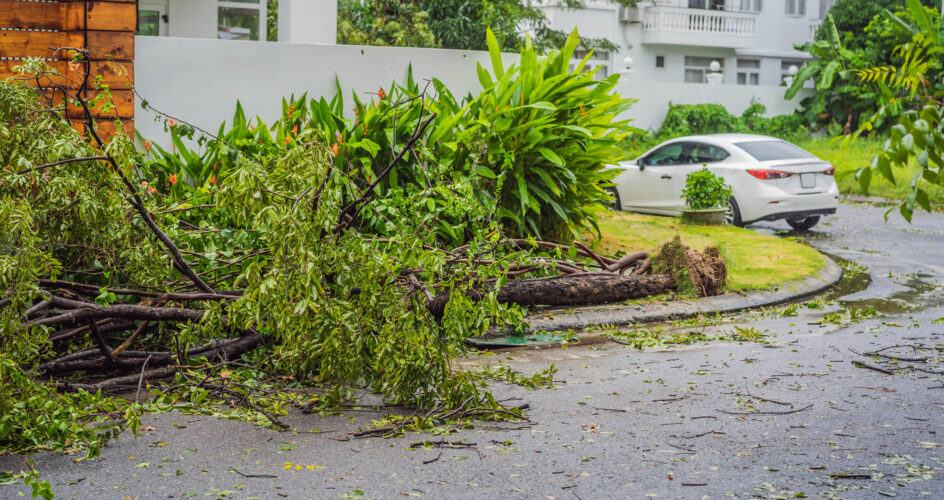
New Orleans homeowners know that storm season can turn a standing tree into an urgent hazard overnight. Emergency tree removal, especially same-day or next-day service after a hurricane or severe storm, typically costs two to three times the standard rate. High demand and limited crew availability during recovery periods drive those prices up. Planning ahead and addressing questionable trees before storm season is the most cost-effective strategy.
 The quoted price for tree removal doesn’t always include every related service. Here are common add-ons to keep in mind.
Stump grinding or removal is usually a separate charge. In New Orleans, stump grinding typically runs between $60 and $350 per stump, depending on the diameter. Full stump removal, which involves pulling the root ball out of the ground, costs more.
Limb removal for overhanging branches that need to come off before or during the main job generally adds $50 to $75 per limb.
Debris hauling is included by many tree service companies, but not all. Confirm whether cleanup and haul-away are part of the estimate or billed separately.
Permit fees may apply in New Orleans, particularly for trees in historic districts or trees above a certain size. The city has specific regulations around heritage trees. Your tree service company should be able to advise on whether a permit is needed.
Getting an accurate budget starts with getting multiple estimates. Reach out to at least two or three local tree service companies and ask for on-site assessments rather than phone quotes. Legitimate professionals need to see the tree, the surroundings, and the access points before giving a reliable number.
When comparing quotes, make sure you’re comparing the same scope of work. One company’s estimate might include stump grinding and debris removal, while another’s might not. Ask what’s included and what carries an additional charge.
If cost is a concern and the tree isn’t an immediate safety hazard, consider scheduling the removal during the slower months between late fall and early spring. Many companies offer better availability and pricing outside of storm season.
Finally, beware of unusually low bids. Tree removal is inherently dangerous work that requires proper insurance, training, and equipment. A quote that seems too good to be true often comes from uninsured operators who cut corners on safety.
At Big Easy Tree Cutting, we’ve helped homeowners across New Orleans handle every type of tree removal, from routine backyard jobs to complex emergency situations. Our experienced crews have the equipment, insurance, and local expertise to get the job done safely and at a fair price.
If you have a tree that needs to come down, or you’re just not sure whether removal is necessary, we’re happy to take a look. Contact Big Easy Tree Cutting today for a free, no-obligation estimate and get a clear picture of what your project will cost.
Most homeowners in New Orleans pay between $400 and $1,900 for tree removal, with the average falling around $1,100. The final cost depends on the tree’s height, species, condition, location on your property, and whether additional services like stump grinding are needed.
Not necessarily. Dead and dying trees are often more expensive to remove because their weakened wood makes them unpredictable and dangerous to work with. Crews need to take additional safety precautions, which adds labor time and cost to the job.
Stump grinding is typically a separate service. In New Orleans, it generally costs between $60 and $350 per stump depending on size. When requesting quotes, always confirm whether stump removal is included or priced separately.
In many cases, yes. New Orleans has regulations governing the removal of certain trees, particularly large or heritage trees and those located in historic districts. Your tree service company can advise you on whether a permit is required and help guide you through the process.
Scheduling tree removal during the off-season, roughly late fall through early spring, can save money. Demand is lower, crews have more availability, and pricing tends to be more competitive compared to the busy storm recovery months of summer and early fall.
 By Admin
  Apr 9, 2026