

Call Us Now: 504-732-9714
Call Us Now: 504-732-9714

You can absolutely replant after a removal, and in most cases you should. What matters is preparing the site properly, choosing a species suited to the spot rather than to the one that just came out, and giving the new tree a realistic amount of room to reach maturity. This guide covers site preparation, placement, timing, and the species that generally do well in the New Orleans area.
The ground where a tree stood is not ready for a new one on the day the crew leaves. Stump grinding leaves a mixture of wood fibers and soil in the hole, and as those chips decompose the microbes doing the work draw nitrogen from the surrounding soil. A tree planted straight into that mix often looks pale and grows slowly through its first season.
Remove most of the grindings rather than raking them level, backfill with quality topsoil, and let the area go through a rain cycle or two so it settles before final grading. Our post on what happens to tree roots after removal covers what remains underground, and Big Easy Tree Cutting can handle grindings removal as part of the job if you ask during the estimate.
Planting in the exact footprint of the old trunk is the most common mistake. Structural roots are still in the ground there, which makes digging a proper hole difficult, and the disturbed soil and remaining wood create poor conditions for a new root system.
Shifting the planting position several feet gives the new tree undisturbed soil to grow into. It also lets you reconsider the location rather than repeating a decision that may not have been ideal in the first place. If the previous tree was in conflict with the house, the driveway, or a utility line, the replacement does not have to inherit that problem.
Almost every problem tree in a New Orleans yard is a good tree in the wrong place. Before choosing a species, look at what surrounds the spot.
Our post on tree removal near power lines explains why the overhead question matters so much, since a large tree planted under a line guarantees a permanent conflict no amount of pruning resolves.
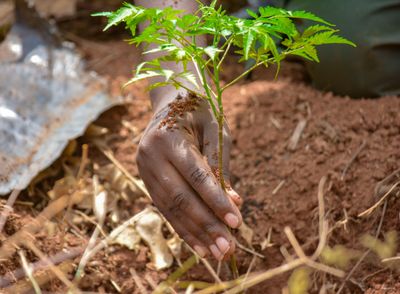
Our region sits in a warm, humid climate with heavy soils, poor drainage in many areas, and regular exposure to tropical weather. Native and well-adapted species tend to handle that combination better than imports chosen from a catalog.
Live oak is the signature tree of the region, wind-firm and long-lived, and it needs a great deal of room to spread. Bald cypress, the Louisiana state tree, tolerates wet ground that would kill most species. Southern magnolia is evergreen and handsome, and it drops leaves year-round. Nuttall oak and Shumard oak both handle heavy soils reasonably well. If you plant a live oak, our guide to caring for live oaks in New Orleans covers its long-term needs.
Crape myrtle is widely planted for good reason, staying small enough for constrained locations and flowering through the summer. Sweetbay magnolia handles damp ground and stays more modest than its southern cousin. Yaupon holly and other native hollies work well as smaller structural plantings. Drummond red maple is adapted to the wetter soils common here.
Palms suit some properties and the local aesthetic, and they have their own care requirements. Our palm tree trimming service covers ongoing maintenance if you go that direction.
Chinese tallow spreads aggressively and is considered invasive in Louisiana, so it is not a species to plant deliberately. Ornamental pear cultivars are known for weak branch structure that fails in wind. Water oak grows fast and is common here, though its wood is comparatively weak and its lifespan shorter than that of live oak.
Species selection benefits from local input. Check recommendations with the LSU AgCenter or a reputable local nursery, since suitability varies with your specific soil, drainage, and exposure.

In our climate, fall through late winter is generally the better planting window. Cooler temperatures reduce stress on a newly installed tree, and roots have several months to establish before the first hard summer arrives. Planting in late spring or summer means the tree faces peak heat while its root system is still confined to the original root ball.
If you do plant outside the ideal window, plan for consistent watering through the first summer. That first season determines a great deal about whether a tree establishes well.
Plant at the correct depth, with the root flare visible at or slightly above grade. Trees planted too deep are one of the most common causes of poor establishment and long-term decline. Loosen circling roots on a container-grown tree rather than dropping the root ball in as it comes.
Mulch a broad ring around the tree a few inches deep, and keep the mulch pulled back from the trunk instead of piling it against the bark. Water deeply and less frequently rather than lightly and often, which encourages roots to grow outward and down. Skip fertilizer at planting and let the tree settle first. Where soil is poor or compacted, deep root fertilization can help once the tree is established.
Early structural pruning in the first several years shapes a tree that will need far less corrective work later. Our tree trimming service covers that work, and our post on what to do with wood after tree removal covers using chips from the old tree as mulch for the new one.
Getting the site right is the part that determines whether your replacement tree thrives. We provide tree removal and stump grinding across the communities on our service area page.
Contact Big Easy Tree Cutting or call 504-732-9714 to plan the work.
Waiting long enough for the site to settle is generally better than planting immediately, particularly where a stump was ground. Removing the grindings, backfilling with quality topsoil, and letting the area go through a rain cycle or two puts a new tree in far better conditions. Offsetting the planting position several feet from the old trunk helps more than waiting alone.
It is usually the worst spot available. Remaining structural roots make digging a proper hole difficult, and the disturbed mixture of soil and wood chips is poor rooting medium. Shifting the position several feet gives the new tree undisturbed soil and lets you reconsider whether the original location was a good one.
Fall through late winter generally works best here, because cooler temperatures reduce stress and roots have several months to establish before summer heat arrives. Planting in late spring or summer is possible but requires consistent watering through that first hot season, which is when most newly planted trees are lost.
Native and well-adapted species generally handle our heat, humidity, and heavy soils best. Live oak and bald cypress suit large open spaces, southern magnolia offers evergreen structure, and crape myrtle, sweetbay magnolia, and native hollies work in tighter spots. Confirm the choice for your specific soil and drainage with the LSU AgCenter or a reputable local nursery.
Chinese tallow is considered invasive in Louisiana and should not be planted deliberately. Ornamental pear cultivars are known for weak branch structure that fails in wind. Large species planted beneath overhead lines create a permanent conflict, so match the mature height to the location before buying anything.
Deep, less frequent watering is generally better than light daily watering, since it encourages roots to grow outward and downward rather than staying at the surface. The first summer is the critical period, especially for trees planted outside the cooler months. Adjust for rainfall rather than watering on a fixed schedule regardless of conditions.
 By Admin
 Sep 26, 2026