Call Us Now: 504-732-9714
Call Us Now: 504-732-9714

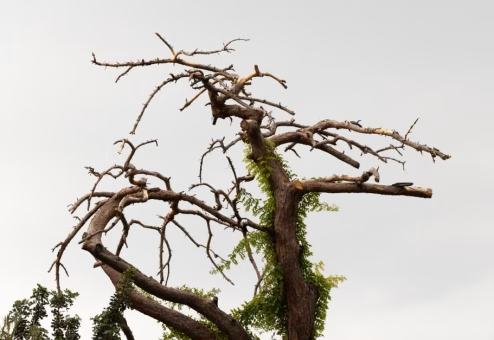
A dead tree is not a stable object waiting patiently for you to get around to it. Every month it stands, decay reduces the strength of the wood, roots lose their grip, and the job of taking it down safely becomes harder and more expensive. This guide explains why dead tree removal is time-sensitive, how crews adapt their methods for unsound wood, and what to expect from the process.
Before anything else, make sure the tree has died rather than declined. Some species leaf out late, drought stress can make a canopy look far worse than the tree’s condition warrants, and a tree that lost most of its leaves in a storm may recover.
The scratch test is the practical check. Scrape a small patch of bark from a twig and look for green, moist tissue underneath. Do this on several branches in different parts of the canopy, since one dead twig proves nothing. Brown and dry throughout, with no bud development in season, points to a dead tree. Our guide on how to tell if a tree is dead walks through the full set of checks, and Big Easy Tree Cutting can confirm it on site if you are unsure.
A living tree repairs itself. It compartmentalizes damage, seals wounds, and grows reaction wood where it is under stress. A dead tree does none of that, and decay organisms work continuously without opposition.
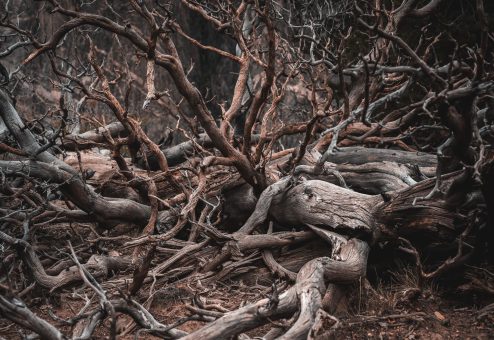
Decay fungi break down the structural components of wood, and the loss is not evenly distributed. A trunk can look intact from the outside while the interior has gone soft. The rate depends on species, moisture, and which organisms are present, so there is no reliable schedule, only a direction.
Roots decay too, and they do it out of sight. A dead tree that has been standing for a while may have lost much of its anchorage even though nothing looks different above ground. This is why dead trees come over in wind that a living tree of the same size would shrug off, and why saturated soil after heavy rain is a particular concern here.
Living trees generally give warning. Dead trees shed limbs without any external sign, and whole-tree failure can happen in ordinary weather. There is no way to look at a dead tree and judge how much longer it has.
This is the part homeowners rarely anticipate. Climbing a tree requires wood a climber can trust, and unsound wood removes that option. Crews then need a lift or a crane, which changes the equipment, the access requirements, and the price. A tree removed shortly after it died is usually a simpler job than the same tree two years later.
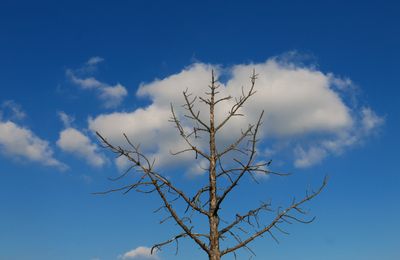
The termite point deserves particular attention in southeast Louisiana. Dead wood close to a house is an unnecessary invitation, and removing it eliminates one food source and harborage site near the structure.
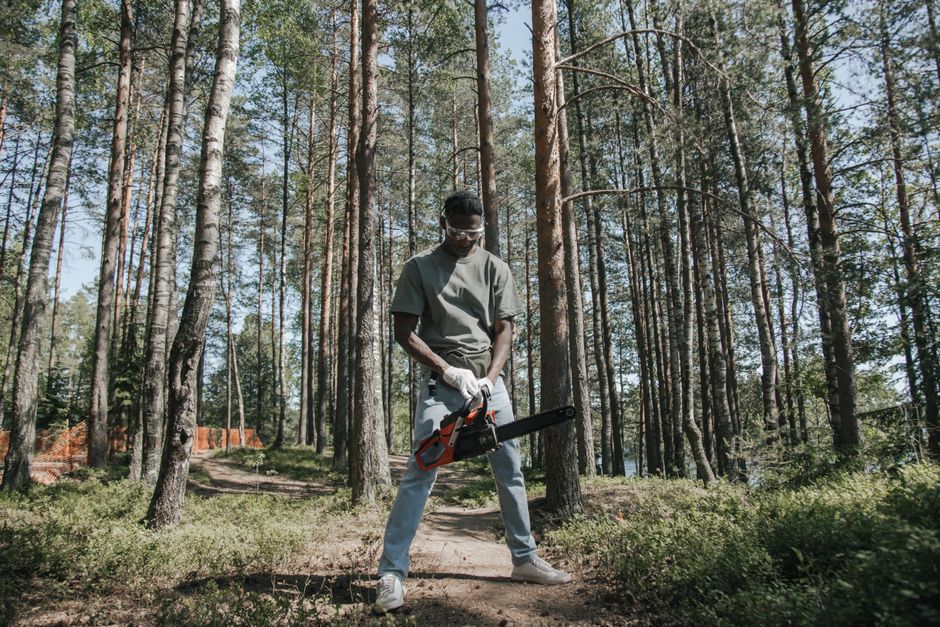
The first change is that climbing is often off the table. A climber’s safety depends on the anchor point and the stem holding load, and neither can be assumed in decayed wood. Crews switch to an aerial lift or a crane so nobody depends on the tree’s structure.
The second change is in how pieces are handled. Dead wood is brittle and does not behave predictably under a rigging load. It can shatter rather than swing, so crews take smaller pieces, use gentler rigging, and often accept a slower pace. Where the tree can simply be felled into open space, that is usually the preferred option because it keeps people away from it entirely.
Assessment before work begins matters more here than on a healthy tree. Sounding the trunk, probing cavities, and checking the base for root decay all inform which method is appropriate. Our post on large tree removal covers the equipment side in more detail.
Dead wood from a tree that died of disease deserves a moment of thought. Where a pathogen was involved, keeping the wood on site as firewood or mulch can be a poor idea depending on the organism, and moving it can spread the problem further. Ask your arborist what killed the tree and whether the wood should leave the property.
Where the tree died from drought, construction damage, or old age rather than disease, the wood is generally fine to keep. Sound sections can be split for firewood, though decayed wood burns poorly and is usually better chipped or hauled.
A stump from a dead tree is decayed wood at ground level, which makes it an efficient home for insects and fungi. Grinding it removes that habitat and returns the spot to usable ground. Our stump grinding service handles this, and our post on what happens to tree roots after removal explains what stays behind and how to plant over the area.
Most trees decline for a season or more before they die, and that window is when intervention is still possible. Dieback in the upper canopy, thinning leaves, and dead branches scattered through the crown are the early signals, covered in our posts on dead branches on a tree and how to spot tree disease. Routine dead wood removal keeps a tree safer while it is still recoverable, and our guide on when a tree needs to be removed covers the decision point.
If you have a standing dead tree, the best time to deal with it was last season and the second best is now. We provide tree removal across the communities on our service area page.
Contact Big Easy Tree Cutting or call 504-732-9714 to schedule an assessment.
There is no reliable answer, which is the core of the problem. Decay rate depends on species, moisture, and the organisms involved, and a dead tree gives no external signal about how much strength it has lost. Because failure can happen without warning and in ordinary weather, dead trees near anything of value should be treated as time-sensitive.
Often it is, and the gap widens the longer it stands. Unsound wood usually rules out climbing, which means a lift or crane, more setup, and more careful handling of brittle sections. Removing a tree soon after it dies is generally simpler than removing the same tree after decay has progressed.
In some settings that is a legitimate choice, since standing dead wood provides habitat. It only makes sense where the tree is far from structures, walkways, roads, and anywhere people gather, and where a failure would cause no harm. On a typical residential lot in a built-up area, those conditions are rarely met.
Dead wood attracts wood-boring insects including beetles, carpenter ants, and termites, and a colony established close to a structure has a short distance to travel. Removing the tree eliminates the food source and harborage, which is a sensible precaution in our region. Existing infestations in a building are a separate matter for a pest control professional.
It depends on what killed it. Where disease was involved, keeping or moving the wood may spread the organism, so ask your arborist before deciding. Where the tree died from drought, root damage, or age, sound sections are generally fine to keep, though heavily decayed wood burns poorly and is usually better chipped or hauled away.
Requirements vary by jurisdiction and by where the tree stands, and some areas treat hazardous or dead trees differently from healthy ones. Trees in the public right of way or under a specific ordinance may involve additional steps. Confirm current requirements with the applicable city or parish department before scheduling the work.
 By Admin
  Sep 1, 2026