Call Us Now: 504-732-9714
Call Us Now: 504-732-9714

Tree trimming after a storm requires careful assessment and a safety-first approach to protect both people and property. Homeowners should stay away from downed power lines, avoid climbing damaged trees, and call a professional arborist to handle hanging branches, split trunks, and leaning trees that pose immediate risks. Knowing what you can safely do yourself and when to call for help will save you money and prevent injuries during the critical hours and days after severe weather.
Louisiana’s hurricane season runs from June through November, and every year, tropical storms and hurricanes leave a trail of broken branches, uprooted trees, and damaged canopies across the New Orleans area. The aftermath can be overwhelming, with debris scattered across yards and roadways. At Big Easy Tree Cutting, we help homeowners navigate storm recovery with safe, effective tree care that protects their property and preserves their trees.
The first hours after a storm are the most dangerous. Adrenaline and urgency can push people into risky situations, but taking a calm, measured approach is always the better path. Before you touch a single branch, there are critical safety steps every homeowner needs to follow.
The most important rule after a storm is to stay away from downed power lines and any tree or branch that may be in contact with electrical wires. Even if a line looks dead, it can still carry a lethal charge. Call your utility company first, and do not approach the area until they confirm the lines are safe. Once electrical hazards are cleared, walk around your property from a safe distance and look for hanging branches, leaning trunks, exposed root systems, and splits in the main trunk.
If you see large branches suspended in the canopy, sometimes called hangers or widow makers, stay clear of the area beneath them. These can fall without warning. This type of hazard calls for emergency tree trimming from a trained crew with the right equipment to work safely around compromised trees.
Not every piece of storm damage requires a professional. Small branches on the ground can be gathered and removed without special equipment. Limbs under three inches in diameter that are broken but still hanging at a reachable height can sometimes be pruned safely with a hand saw or lopper, as long as the branch is not under tension or near power lines. Always cut just outside the branch collar to promote proper healing.
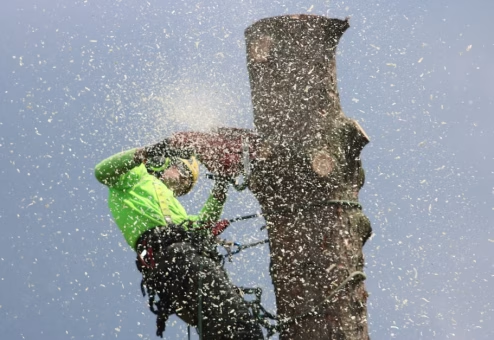
However, any work that involves climbing, chainsaws, branches near utility lines, or structurally compromised trees should be left to professionals. Reviewing essential tree trimming safety tips before picking up any tools can help you understand where the line is between a simple cleanup and a dangerous job.
Understanding the type and severity of storm damage helps you make smarter decisions about which trees to save and which may need to come down.
Hanging branches are the most common and most immediately dangerous form of damage. These partially detached limbs can fall at any time, making them unpredictable. Split trunks, where the main trunk has cracked or separated, are a sign of severe structural failure. A tree with a split trunk is rarely salvageable and often requires full tree removal to prevent further property damage.
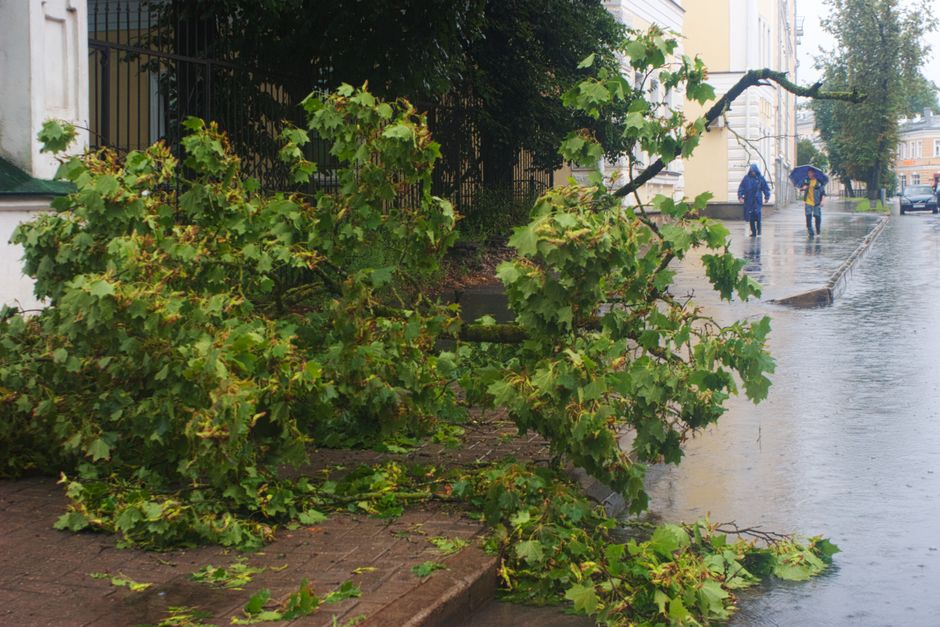
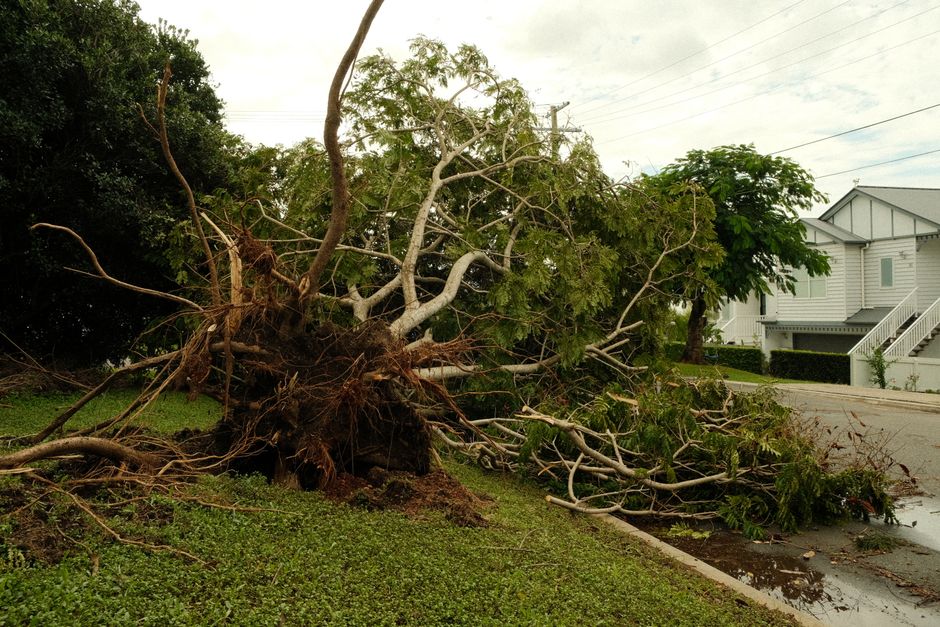
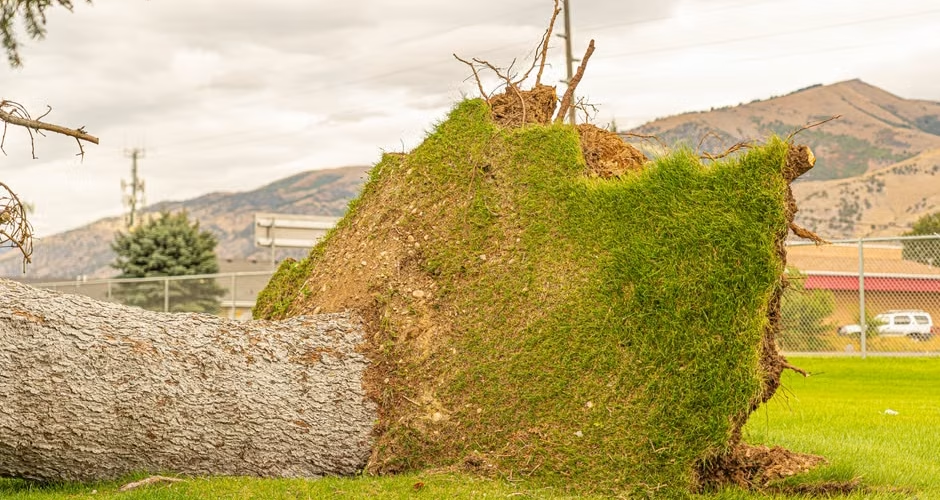
Leaning trees that were not leaning before the storm indicate root failure. Check the base for cracked or heaving soil, which suggests the root plate has lifted. Root upheaval of more than 25 percent generally means the tree cannot recover. Learning how to tell if a tree is dead or beyond recovery is an important skill for any homeowner dealing with storm aftermath.
Many storm-damaged trees can be saved through restoration pruning. This technique involves carefully removing broken, torn, and hanging branches while preserving as much healthy canopy as possible. The goal is to support the tree’s natural healing through compartmentalization, the process by which trees wall off damaged tissue to prevent decay from spreading into healthy wood.
Restoration pruning should be done in stages over one to three years rather than all at once. Removing too much canopy in a single session shocks the tree and reduces its ability to produce energy for recovery. A professional arborist will remove only the damaged material in the first pass, then return in subsequent seasons to reshape the canopy through crown reduction and selective thinning. Proper dead wood removal during this process eliminates entry points for disease and insects.
One of the worst things you can do to a storm-damaged tree is top it. Topping involves cutting main branches back to stubs, which creates large wounds that heal slowly, triggers explosive growth of weak water sprouts, and dramatically increases the risk of future failure. Despite being widely discredited by arborists, topping remains common after storms because it appears to be a quick fix. It almost always causes more harm than the storm itself.
Another frequent mistake is leaving hanging branches in the canopy because they seem stable. Widow makers can remain suspended for weeks before falling, and the longer they stay up, the more complacent people become about the danger beneath them. Homeowners also sometimes delay dealing with partially uprooted trees, hoping they will recover. In most cases, a tree that has shifted at the roots will continue to lean and eventually fall. Preparing your trees before storms hit is always the better strategy, and our guide on tree trimming for hurricane season covers the steps you should take well in advance.
After every major storm in New Orleans, unlicensed operators go door to door offering cheap tree work. These storm chasers often lack insurance, proper equipment, and training. They may top your trees, leave debris behind, or disappear after collecting payment without completing the job. To protect yourself, always verify that any tree service carries liability insurance and workers compensation coverage. Ask for references, check reviews, and be skeptical of anyone who demands full payment upfront. Understanding what tree services actually cost in New Orleans helps you recognize when a quote is suspiciously low.
If your property has trees near structures or utility lines, or if a storm has left damage that may affect neighboring properties, you may also need to be aware of local construction permitting requirements before major tree work can begin.
Sometimes the best decision is to remove a storm-damaged tree rather than attempt to save it. Trees with more than 50 percent canopy loss, major trunk splits, extensive root upheaval, or pre-existing decay exposed by the storm are generally candidates for removal. A qualified arborist can perform a storm damage assessment to determine whether the tree has enough structural integrity to warrant restoration. Professional tree trimming after a storm is about making informed decisions that balance preservation with safety.
If your trees have been damaged by a storm, contact Big Easy Tree Cutting or call 504-732-9714 for a professional assessment. We serve homeowners throughout New Orleans and the surrounding areas with reliable, safe storm recovery tree care.
Homeowners can safely remove small fallen branches that are on the ground and not near power lines. However, any work involving hanging branches, climbing, chainsaws, or trees near electrical wires should always be handled by a licensed professional to avoid serious injury.
You should have a professional assessment done as soon as possible, ideally within the first few days after the storm passes. Hanging branches and leaning trees become more dangerous over time, and early intervention can prevent secondary damage to your home or property.
Many storm-damaged trees can be saved through restoration pruning if they still have at least 50 percent of their canopy intact and no major trunk splits or root upheaval. A professional arborist can evaluate the damage and recommend whether restoration or removal is the better option.
Topping creates large wounds that are slow to heal and stimulates the rapid growth of weak, poorly attached water sprouts that are even more likely to fail in future storms. It also removes the tree’s ability to produce enough food through photosynthesis, which weakens the entire tree over time.
Always verify that any tree service carries liability insurance and workers compensation. Ask for local references, check reviews, avoid companies that demand full payment upfront, and be cautious of prices that seem significantly lower than other estimates you have received.
Trees with split trunks, more than 50 percent canopy loss, significant root upheaval, or visible internal decay exposed by the storm are typically candidates for removal. A leaning tree that was upright before the storm is another strong indicator that the root system has failed beyond recovery.
 By Admin
  Jul 10, 2026