Call Us Now: 504-732-9714
Call Us Now: 504-732-9714

When a storm brings a tree down in Louisiana, the first hour matters. Downed conductors, unstable limbs still hanging in the canopy, and trunks resting on a roof all carry risks that are easy to underestimate from the ground. This guide covers what to do first, who to call in what order, how to document damage for an insurance claim, and how emergency tree removal differs from a scheduled job.
Not every storm-damaged tree needs an overnight crew. Emergency response is warranted when a tree or limb has struck a structure, is resting on or near power lines, is blocking the only access to a property, or is hung up in another tree where it could drop without warning. A limb on the lawn with nothing underneath it can generally wait for a scheduled visit.
The distinction matters because emergency work is performed under worse conditions, often at night, sometimes in wind and rain, and with less time to plan the rigging. Reserving it for genuine hazards keeps crews available for the properties that need them most. Big Easy Tree Cutting handles both, and part of the initial call is sorting out which category your situation falls into.
Work through these steps in order before anyone goes near the tree.
Storm-damaged wood behaves differently from a standing tree. Trunks and limbs under bending load store energy, and a cut in the wrong place releases it violently. This is the single most common way homeowners are injured during storm cleanup.
If anyone is injured, if you smell gas, or if there is fire, call 911 first. Nothing else on this list comes before that.
Report downed or damaged power lines to your electric utility before calling a tree service. Tree crews are generally not permitted to work near energized conductors, and the utility has to de-energize or clear the line before removal can begin. Reporting early also puts your address in the restoration queue.
Once the site is safe to approach, call a tree service that handles emergency work. Describe what the tree is resting on, whether wires are involved, and whether the crew can reach the tree with equipment. That detail lets the company send the right gear rather than making two trips.
Report the damage promptly and ask what your policy requires before cleanup begins. Some policies expect notice before non-emergency work starts, and coverage depends on your specific policy terms. Reasonable steps to prevent further damage, such as tarping an opening, are usually appropriate to take right away, though you should confirm this with your insurer.
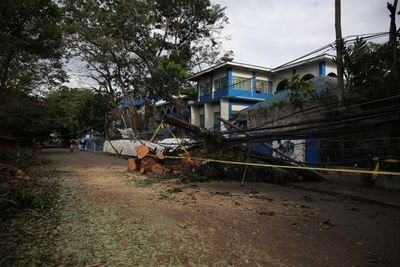
Photographs taken before anything is moved are worth more than any description written later. Capture wide shots that establish the whole scene, then move in for detail on the point of impact. Include the base of the tree, the failure surface, and anything the tree struck on its way down.
Keep every receipt, including the emergency call, tarps, and temporary lodging if the home is not habitable. Ask your tree service for an itemized invoice that separates emergency response from cleanup and disposal, since insurers often treat those line items differently. Whether any of it is reimbursed depends on your policy, the cause of loss, and your deductible, so confirm the specifics with your insurer rather than assuming.
A crew arriving at a storm call starts with an assessment rather than a saw. They identify what is holding the tree in place, where the load is, and what will move when the first cut is made. On a tree resting against a house, that usually means securing the trunk with rigging so nothing shifts toward the structure.
From there the tree comes apart in pieces, working from the top down or from the free end back toward the load. Sections are lowered on ropes rather than dropped when there is anything underneath worth protecting. Where a crane or lift can reach, larger pieces can be picked and set down clear of the house, which is faster and puts less shock into the structure.
Once the hazard is neutralized, the pace changes. Cleanup, chipping, and hauling are ordinary work and are often scheduled for a follow-up visit so the crew can move on to the next emergency. If the tree came out of the ground entirely, stump grinding is typically handled separately once the site has dried out.
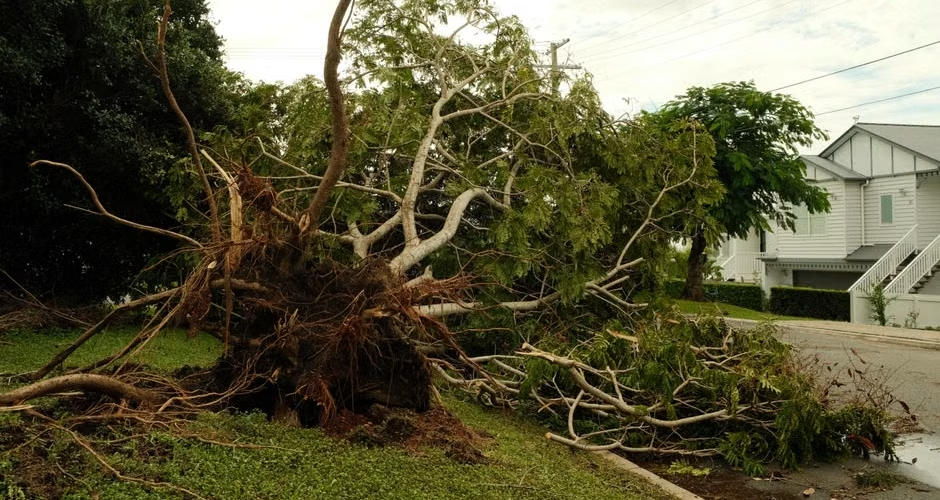
Our storms produce a distinct pattern of damage. Sustained wind loads a canopy for hours rather than seconds, and the ground is usually saturated by the time the strongest gusts arrive. Wet soil holds roots far less firmly than dry soil, which is why whole trees tip over here in winds that would only break limbs elsewhere.
Species matters as well. Water oaks and other fast-growing hardwoods put on wood quickly and tend to be more brittle than slower-growing species. Live oaks are generally more wind-firm but can shed enormous limbs. Pines snap at height. Recognizing which trees on your property carry the most risk is the point of a pre-season inspection, and our post on how tree trimming protects your home during hurricane season explains what that work involves.
Emergency calls are expensive and disruptive, and a meaningful share of them trace back to defects that were visible months earlier. A pre-season walkthrough looks for the same things covered in our guide to knowing when a tree needs to be removed: cracks, decay at the base, dead wood in the upper canopy, and recent changes in lean.
Preventive work generally includes removing dead and broken limbs, reducing the sail area of dense canopies, and clearing branches away from the roofline. Our emergency tree trimming service handles the urgent cases, while scheduled tree trimming is the version that costs less and happens on your calendar. For care in the days after a storm passes, see our guide to tree care after a storm in New Orleans.
If a tree is on your house, blocking your driveway, or hanging over an area where people go, do not wait for daylight or for the weather to clear on its own schedule. We provide tree removal throughout the parishes listed on our service area page.
Contact Big Easy Tree Cutting or call 504-732-9714 and describe what you are looking at so we can send the right crew.
Get everyone out of the affected part of the house and away from any rooms beneath the impact, then check from a safe distance for downed power lines. Call 911 if anyone is hurt or if you smell gas, and report any damaged lines to your electric utility before a tree crew is dispatched. Photograph the scene before anything is moved, then call a tree service that handles emergency response.
Storm-damaged wood is under tension and compression in ways that are difficult to read from the ground, and cutting in the wrong place can release that energy suddenly. Limbs still lodged in the canopy can also drop while you are working below. Small branches on open ground are usually manageable, but anything resting on a structure, under load, or near wires should be left to a trained crew.
It depends entirely on your policy, the cause of the damage, and your deductible, so the only reliable answer comes from your insurer. Many policies respond differently depending on whether the tree struck a covered structure or simply fell in the yard. Notify your insurer promptly, ask what documentation they need, and keep itemized invoices that separate emergency work from routine cleanup.
Response times vary with the scale of the event, road access, and utility restoration, and a widespread system generates far more calls than any company can answer at once. Properties where a tree is on an occupied structure or blocking emergency access are typically prioritized. Calling early and describing the hazard accurately helps a company triage and schedule realistically.
Usually not. Emergency work focuses on neutralizing the immediate hazard, and stump grinding is normally scheduled as separate follow-up work once the site is stable and dry enough for equipment. Handling it this way keeps crews available for other urgent calls and gives you a clearer invoice.
Local requirements vary by jurisdiction and by where the tree stands, and some areas treat emergency situations differently from planned removals. Trees in a public right of way, under a utility easement, or covered by a local ordinance may involve other parties. Confirm current requirements with the applicable city or parish department, and ask your tree service what they have seen in your area.
 By Admin
  Aug 4, 2026