Call Us Now: 504-732-9714
Call Us Now: 504-732-9714

Most homeowners want a single number, and the honest answer is that tree removal time varies widely by project. A small backyard tree with clear access is a different job from a mature live oak overhanging a slate roof with a shared driveway as the only way in. What follows is a breakdown of the factors that actually move the clock, what happens hour by hour on removal day, and how to plan your schedule around the work.
Two trees of identical height can take very different amounts of time to remove. The variable that matters most is rarely the size of the tree. It is whether a crew can drop wood freely or has to lower every piece on a rope, and whether equipment can reach the trunk or everything has to be carried out by hand.
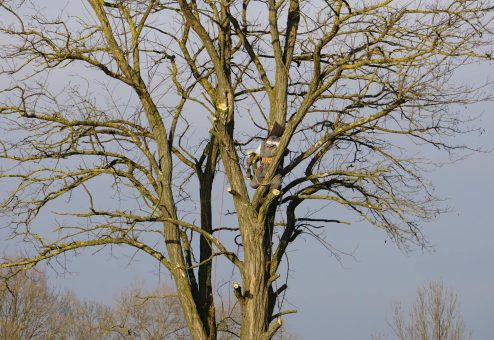
A tree in an open field can often be felled in one piece and processed on the ground quickly. The same tree between a house and a fence has to be dismantled from the top, section by section, with each piece controlled on its way down. That difference alone can multiply the time on site several times over. Any company that quotes a firm duration without seeing the site is guessing, which is why Big Easy Tree Cutting assesses the property before committing to a schedule.
Height, trunk diameter, and canopy spread all add work, though not in a straight line. Doubling the diameter of a trunk more than doubles the volume of wood that has to be cut, moved, and hauled. Dense hardwoods such as live oak cut more slowly and weigh considerably more per piece than softer species, which affects both cutting time and how many trips the truck makes.
This is usually the deciding factor. Ask yourself whether a truck can reach the tree, whether there is a gate wide enough for equipment, and whether there is open ground for pieces to land. Narrow side yards, raised houses, neighboring fences, and overhead wires all push the job toward slow, controlled dismantling.
Anything valuable underneath the tree changes the method. Roofs, decks, pools, sheds, air conditioning units, and irrigation all mean rigging rather than free-dropping. If conductors run through or near the canopy, the utility may need to be involved before work can start, and that coordination can add days to the calendar even though it adds no hours to the actual removal.
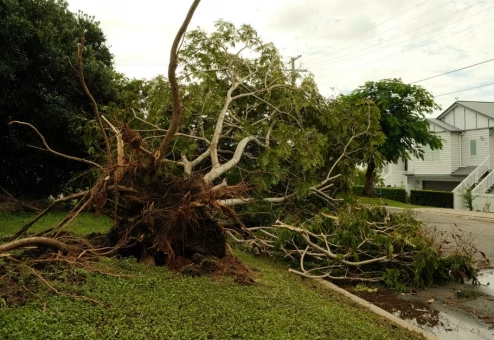
Healthy wood is predictable. Decayed or storm-damaged wood is not, and a climber cannot safely trust a trunk that may be hollow. Compromised trees often require a lift or crane instead of climbing, which changes both the equipment scheduling and the sequence of cuts. Our guide on knowing when a tree needs to be removed covers the conditions that push a job in this direction.
Whether you want everything hauled away, the wood cut into rounds and left, or chips spread on your beds changes the back half of the day considerably. Hauling adds trips. Leaving usable wood on site removes them.
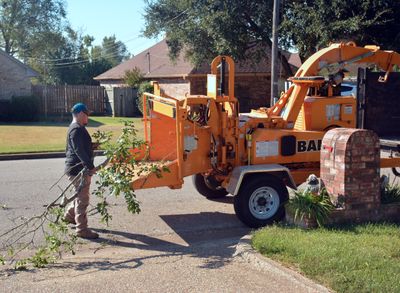
The sequence is fairly consistent regardless of the size of the job.
Setup and cleanup consume more of the day than most people expect. On a straightforward job they can account for a substantial share of the total time, which is why very small trees rarely take proportionally less time than their size suggests.
Removal and stump grinding are different operations using different equipment, and many companies schedule them separately. That is normal practice rather than a delay tactic. A grinder has to be trailered in, and access for a grinder is not always the same as access for a chip truck.
If you want the stump gone, say so during the estimate so it can be planned rather than added afterward. Our stump grinding service covers the process, and our comparison of stump grinding versus full stump removal explains which one suits your plans for the space.
Scheduling lead time and on-site duration are two different things, and lead time is usually the longer of the two. Demand for tree work in southeast Louisiana is seasonal and event-driven. The weeks after a named storm are the busiest of the year, and every reputable company in the region books out.
Planning removals for the quieter stretches of the calendar gives you more control over the date and a crew that is not working through a backlog. If the tree is a genuine hazard, that logic does not apply and the work should happen as soon as a crew can get there. Our post on emergency tree removal after a Louisiana storm covers those situations.
Even a well-planned removal can run long. Common reasons include hidden decay that forces a change of method mid-job, metal in the trunk from old fencing or hardware that damages a chain, weather that makes climbing or rigging unsafe, and utility coordination that has to be resolved before work continues.
Permitting can also affect the calendar rather than the day itself. Requirements vary by jurisdiction and by where the tree stands, and construction-related removals in particular may involve additional review. Confirm current requirements with the applicable city or parish department, and see our overview of tree removal permits in New Orleans for background. For project work, our construction permitting service manages that process.
The only way to know how long your removal will take is to have someone look at it. An on-site estimate covers access, rigging needs, equipment, and cleanup scope, and it produces a schedule you can actually plan around. We provide tree removal and tree trimming across the communities on our service area page.
Contact Big Easy Tree Cutting or call 504-732-9714 to schedule an estimate.
Not always. Access and what sits underneath the tree usually influence the timeline more than height or diameter do. A large tree in an open yard where wood can be dropped freely can go faster than a medium tree wedged between a house and a fence that has to be dismantled piece by piece and lowered on ropes.
You do not usually need to be present for the whole job, but being available at the start and finish is helpful. A brief walkthrough at the beginning confirms the plan and any surfaces that need protecting, and a walkthrough at the end lets you confirm the cleanup meets your expectations before the crew leaves.
Interior access is essentially never needed. Access through a neighboring property is occasionally the only practical route for equipment, and that has to be arranged with the neighbor in advance rather than on the day. Raising it during the estimate gives everyone time to sort it out.
Often it is scheduled separately, because grinding uses different equipment that has to be brought to the site and because access for a grinder can differ from access for the removal itself. Confirm during the estimate whether stump grinding is included and whether it is planned for the same visit or a follow-up.
Work stops. Climbing, rigging, and operating a lift in lightning or high wind is unsafe, and a responsible crew will secure the site and return rather than push through. In our region this is a normal part of scheduling, and it is worth building a little flexibility into the date you choose.
Lead time depends on the season and on recent weather rather than on your tree. Quiet stretches of the calendar generally allow more choice of dates, while the weeks after a significant storm see every company in the region working through a backlog. Booking non-urgent work outside storm season usually gives you the most control over timing.

 By Admin
  Aug 8, 2026