Call Us Now: 504-732-9714
Call Us Now: 504-732-9714

A tree usually gives warning before it becomes a hazard. Cracks in the trunk, decay at the root collar, a canopy that thins from the top down, and a lean that appeared after a storm are all signals worth taking seriously. This guide walks through the structural, biological, and location-based signs that point toward removal, and explains which problems a qualified arborist can often correct instead.
Removal is the last option in tree care, and a good arborist treats it that way. Most declining trees can be improved with pruning, soil work, or simply time. Removal becomes the reasonable choice when a tree has lost enough structural integrity that it can no longer support its own weight safely, when decay has moved into the trunk or roots, or when the tree sits somewhere it will always be in conflict with a building, a driveway, or a utility line.
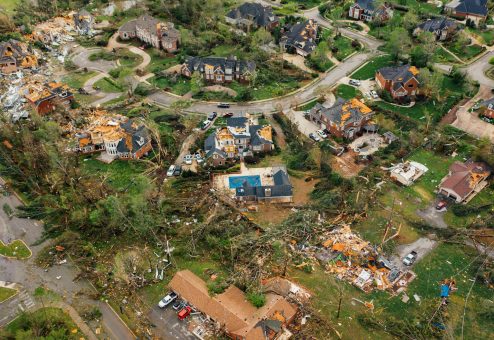
The decision carries extra weight in southeast Louisiana. Saturated soils, a long growing season, and named storms from June through November mean a compromised tree here can fail under conditions a tree in a drier climate might survive. If you are weighing the question for your own property, Big Easy Tree Cutting can inspect the tree and tell you honestly whether it needs to come down.
The trunk carries the entire load of the tree, so trunk defects deserve the most attention.
Vertical cracks that run for several feet, especially ones that open and close as the tree moves in wind, indicate the trunk is separating. A seam that has healed over and stayed closed for years is a different situation from a fresh split after a storm. Cavities and hollows are common in mature trees and do not automatically mean removal, since trees can compartmentalize decay and keep standing for decades. What matters is how much sound wood remains around the hollow and where the hollow sits relative to the load.
Look also for bulges, sunken areas, and bark that sounds hollow when tapped. Sections of missing bark with no callus forming around the edge suggest the tissue underneath has died. Multiple trunks joined at a narrow V with included bark between them are a known weak point, and that union is often where a tree fails in high wind.
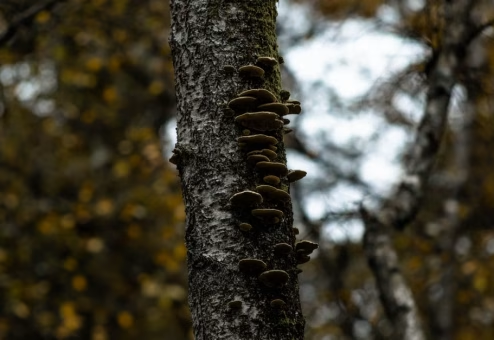
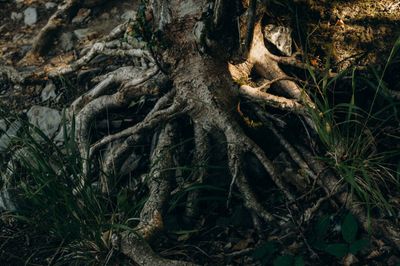
Root problems are harder to see and frequently more serious than anything happening in the canopy. Soil that has heaved or cracked on one side of the trunk can mean the root plate is lifting. Mushrooms and shelf fungi growing at the base are fruiting bodies of decay organisms that may already be working inside the root system or the lower trunk.
Trees that have had roots severed by trenching, driveway work, or utility installation often decline several seasons later, well after the work is finished. Soil compaction from repeated vehicle parking or construction traffic restricts the oxygen roots need and can produce the same slow decline. Because so much of this happens underground, a visual inspection alone may not settle the question, and a professional assessment can include probing, sounding, and a look at the wider root zone.
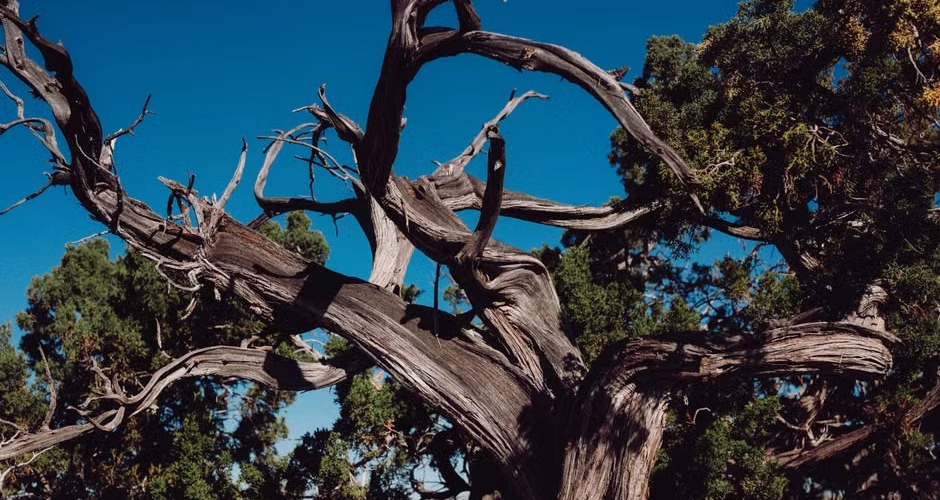
Isolated dead branches are normal and are handled with routine pruning. Widespread dead wood distributed through the upper canopy is different, because it often means the tree cannot move water and nutrients to its outermost tips. Progressive dieback that starts at the crown and works downward is a recognized indicator of decline. Learn to tell the difference by reading about dead branches on a tree and what causes them.
Compare the tree with others of the same species nearby. Leaves that are noticeably smaller, paler, or sparser than the neighborhood norm point to a tree working under stress. Dropping leaves weeks ahead of schedule year after year is a pattern worth investigating rather than dismissing.
Conks, brackets, and clustered mushrooms on the trunk indicate internal decay that has advanced far enough to fruit. This is one of the more reliable signals that removal may be necessary, because by the time fungi are visible on the outside, wood loss inside is typically well underway. Our guide on how to spot tree disease covers what to look for.
Not every leaning tree is dangerous. Many trees grow at an angle their whole lives as they reach for light, and they build supporting wood to match. The concern is a lean that is new, a lean that has increased, or a lean paired with lifted soil, exposed roots, or cracked ground on the opposite side.
A useful habit is to photograph mature trees on your property once a year from the same spot. A slow change is nearly impossible to notice day to day and obvious in a side by side comparison. After any tropical system, walk the property and check whether anything has shifted. If a tree has already come down, our post on what to do when a tree falls on your property walks through the next steps.
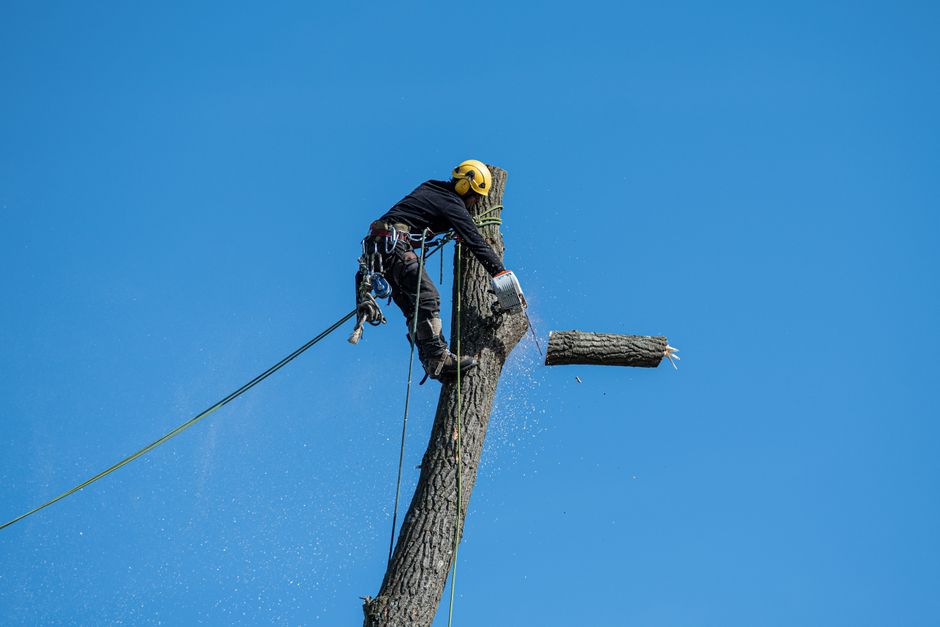
Sometimes a perfectly healthy tree has to go because of where it stands.
Before assuming a location conflict requires removal, ask whether root pruning, hardscape redesign, or crown reduction and lifting would resolve it. Clearance problems in particular are often a trimming question rather than a removal question.
Plenty of alarming symptoms have straightforward fixes. Storm-torn limbs can be cleaned up and the wounds cut properly so the tree can seal them. A crowded, heavy canopy can be opened up through crown thinning to reduce wind resistance. Dead wood scattered through an otherwise vigorous tree is handled with dead wood removal. Nutrient problems in poor or compacted soil often respond to deep root fertilization.
Getting a second opinion before removing a mature tree is a prudent step. A tree that took forty years to reach its current size cannot be replaced quickly, and the shade, stormwater capture, and property character it provides are worth preserving where the tree is genuinely safe.
Tree work in the New Orleans area can be subject to local requirements, and those requirements vary depending on where the tree stands. A tree entirely on private property is treated differently from one in the public right of way, and construction projects can bring additional review into the picture. Requirements also differ between Orleans Parish and neighboring jurisdictions such as Jefferson and St. Tammany.
Because these rules change and depend on the specific property, confirm current requirements with the applicable city or parish department before work begins rather than relying on general guidance. Our overview of tree removal permits in New Orleans is a starting point, and our construction permitting service handles this process for projects that need it.
If you are seeing more than one of the signs described here, have the tree looked at rather than guessing. A qualified inspection costs far less than an emergency call after a failure, and it may well conclude that the tree can stay. We serve New Orleans and the surrounding parishes listed on our service area page, and we handle tree removal along with stump grinding when a tree does need to come down.
Contact Big Easy Tree Cutting or call 504-732-9714 to schedule an assessment of your trees.
The scratch test is the simplest check. Scrape a small area of bark on a twig with a fingernail or knife and look for green, moist tissue underneath. Green means living tissue, while brown and dry tissue on multiple branches across the tree suggests it has died. Test several branches in different parts of the canopy before drawing a conclusion, because a single dead twig proves very little.
No. Trees compartmentalize decay and can live for many years with a hollow center, since the strength of a trunk comes largely from the outer wood. What matters is how much sound wood remains around the cavity, where the cavity sits, and what the tree could damage if it failed. An arborist can assess the remaining wall thickness and the targets nearby before recommending removal.
Sometimes. A long-standing lean that the tree has grown to support is generally less concerning than a lean that appeared recently or has increased. Where the root plate is intact, options such as crown reduction to lower the load, or cabling and bracing, may be appropriate. A new lean combined with lifted soil or cracked ground usually signals root failure and calls for prompt professional evaluation.
Urgency depends on what the tree could hit as much as on the decay itself. A declining tree in an open field away from structures may be monitored over several seasons, while the same tree over a bedroom or a driveway warrants faster action. Decay near the base or in a main stem, combined with a nearby target, should be evaluated without delay.
If a tree already shows significant structural defects, addressing it before the season is generally more practical than during or after a storm. Crews are in far higher demand once a system passes through, and access to a damaged property is harder. Trees that are structurally sound often do not need removal at all and may simply benefit from pruning that reduces wind resistance.
The property owner makes the final call, ideally with an assessment from a qualified arborist and confirmation of any local requirements that apply. Where a tree sits in a right of way, is subject to a local ordinance, or falls under a utility easement, other parties may be involved. Confirming ownership and jurisdiction before scheduling work avoids complications later.
 By Admin
  Aug 1, 2026