Call Us Now: 504-732-9714
Call Us Now: 504-732-9714

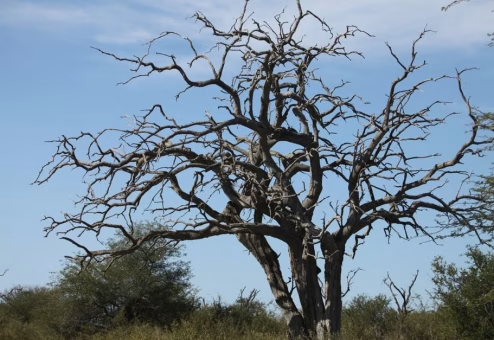
A diseased tree typically shows warning signs long before it dies: look for discolored or prematurely dropping leaves, sunken cankers on bark, oozing sap, unusual fungal growth on the trunk, or dieback in the upper canopy. In New Orleans, Louisiana’s warm, humid subtropical climate means trees face disease pressure year-round, making early detection especially critical. If you notice any of these signs, contact a certified arborist for an evaluation before the disease spreads to neighboring trees.
New Orleans presents one of the most challenging environments for tree health in North America. The combination of high humidity, heavy seasonal rainfall, waterlogged clay soils, extreme summer heat, and recurring tropical storm stress creates near-perfect conditions for fungal pathogens, bacterial infections, and insect-vectored diseases to take hold. At Big Easy Tree Cutting, our arborists see the results of this climate every day across the Greater New Orleans area, including trees in Metairie, Kenner, Chalmette, and the Westbank that went from mildly stressed to critically diseased in a single growing season. Understanding the local disease landscape, and the visual signs that come with it, is the first step toward protecting your trees.
Louisiana’s subtropical climate means there is no true dormant season where disease activity pauses. Fungal spores move year-round. Insects that vector wilt diseases remain active far later into the fall than in northern states. And when a major storm or prolonged drought stresses a tree, it can become vulnerable to pathogens that a healthy tree would easily resist. Catching disease signs early, before the infection reaches critical mass, is the difference between a treatable problem and a tree that must come down.
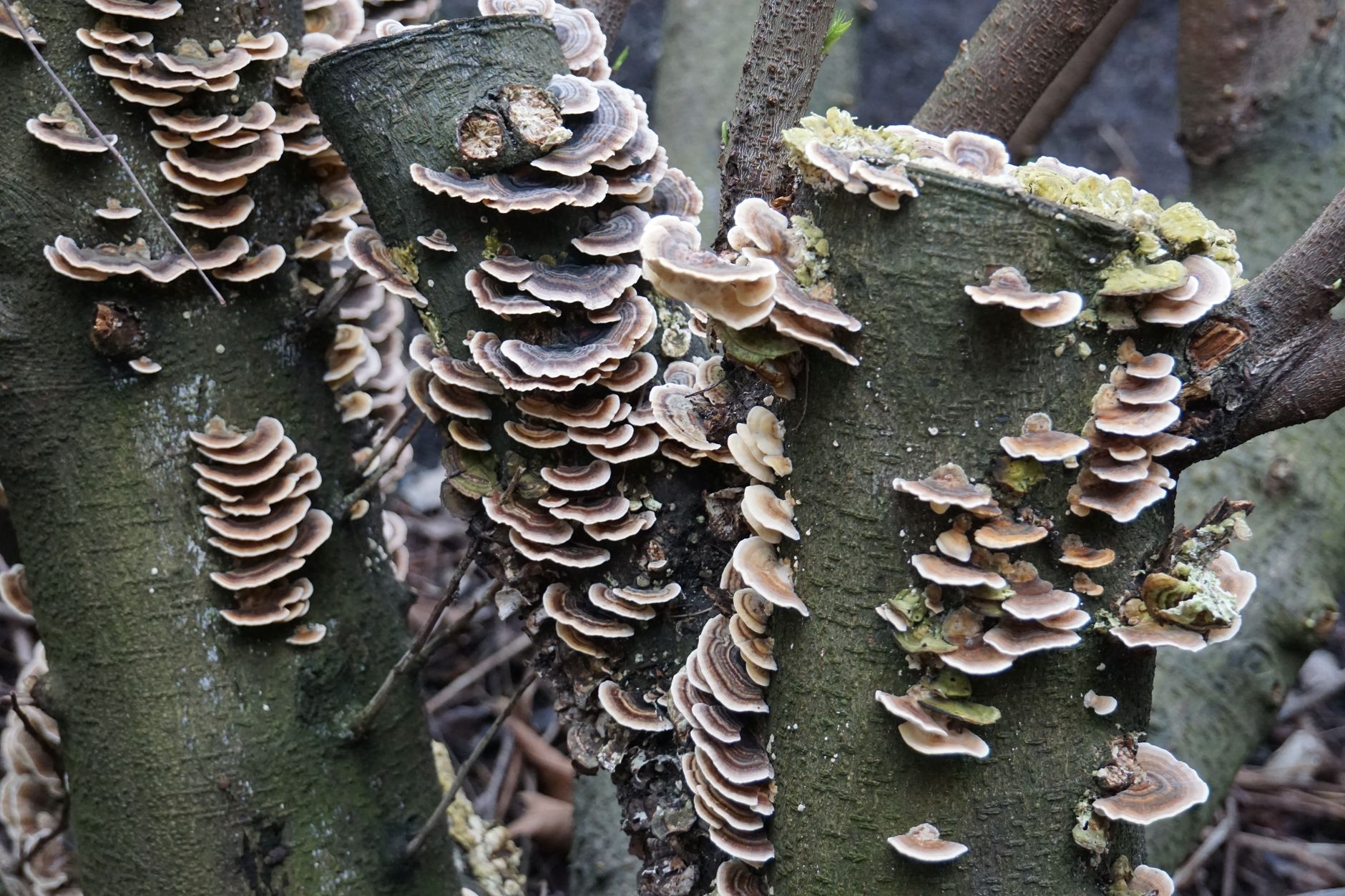
Start your inspection by walking a full circle around the tree and observing each zone from top to bottom: the canopy and leaves, the branches and bark, the trunk, and finally the root collar where the trunk meets the soil. Problems visible in one zone are often rooted in another, and in New Orleans, what looks like a leaf problem is frequently a signal of root damage from waterlogged soil or vascular disease that started at the bark. If you are also noticing structural concerns, review Signs a Tree Needs Trimming for related warning indicators.
The canopy is where disease most often announces itself first, and in New Orleans, the growing season runs long enough that you have ample opportunity to catch early canopy changes if you are paying attention. Key symptoms include:
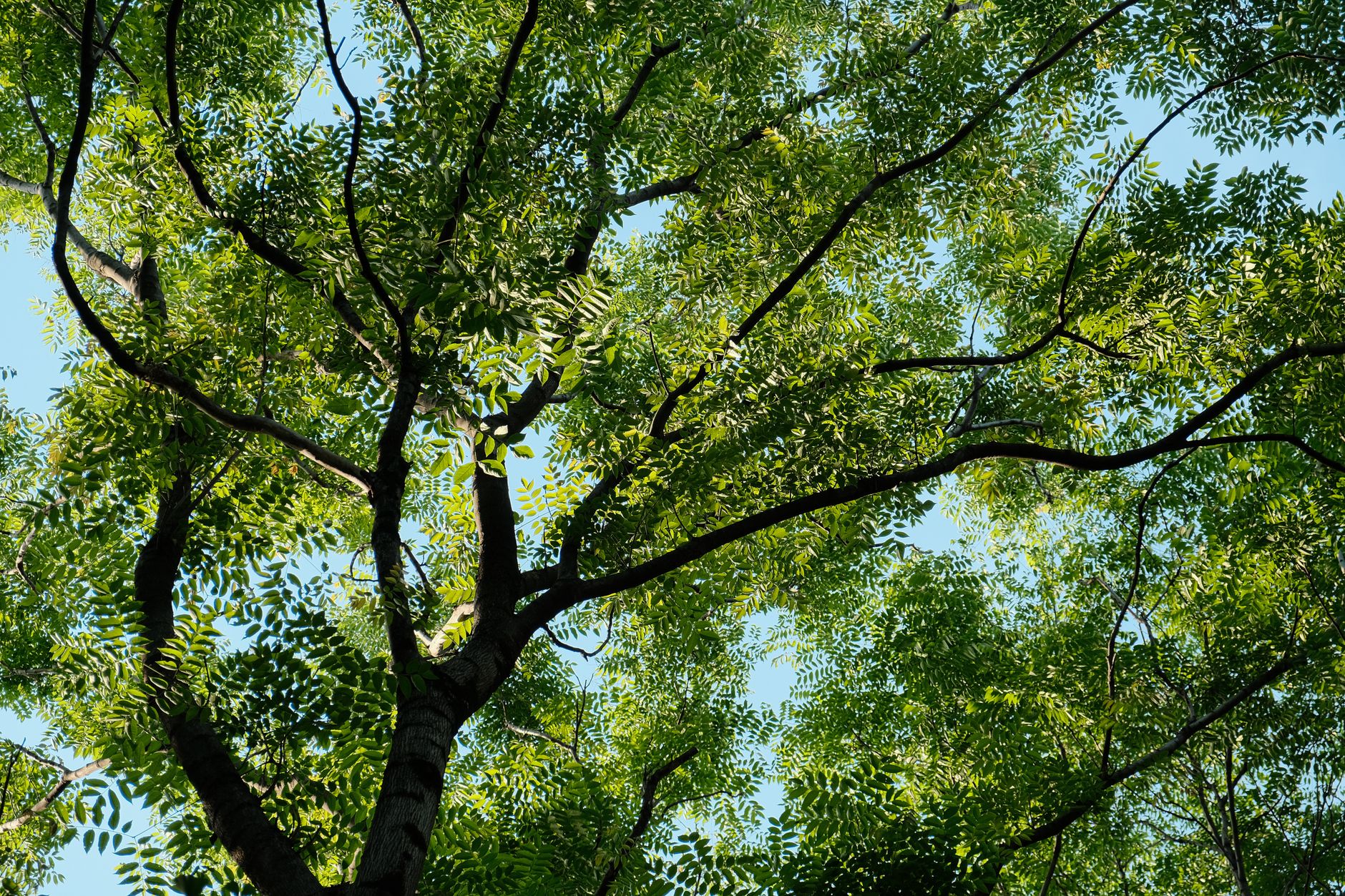
The bark is a tree’s primary defense layer, and damaged or diseased bark in Louisiana’s humid climate is quickly colonized by opportunistic fungi and bacteria. Watch for these trunk-level signs:
Removing diseased and dead wood promptly is one of the most effective ways to slow the spread of bark-borne fungi in Louisiana’s warm, wet conditions. Learn more about Dead Wood Removal and why it is a critical part of tree disease management in New Orleans.
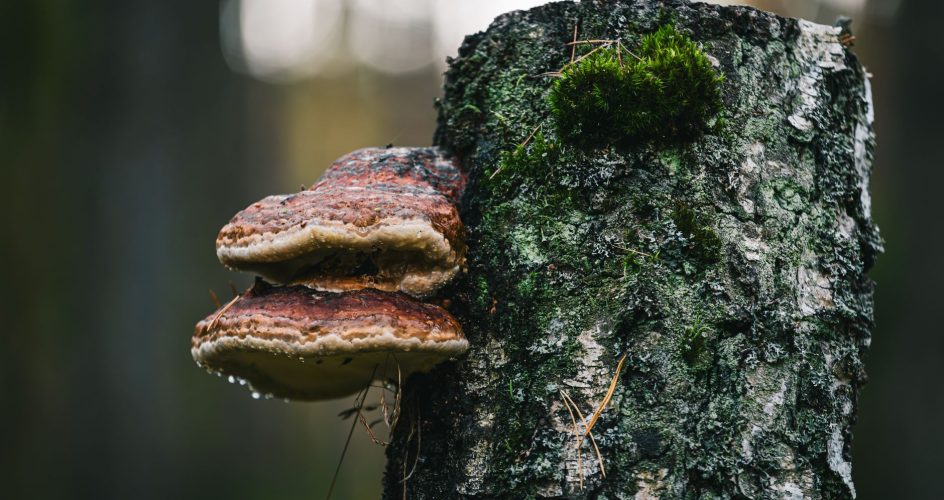
Fungal conks are shelf-like or bracket-shaped fruiting bodies that grow directly from the trunk or large surface roots. They are one of the most serious signs you can find on a tree because by the time a conk appears on the outside, extensive internal decay has already taken hold. In New Orleans, where trees grow fast and root systems often contend with compacted urban soils and periodic flooding, conk development can advance quickly once it starts. A tree with large conks near its base is a structural risk, regardless of how healthy its canopy appears.
Mushrooms sprouting from the soil at the root zone confirm Armillaria root rot, a soil-borne fungal disease that is common in Louisiana’s clay-heavy, frequently waterlogged soils. Armillaria can persist in a stump or root system for years and infect new trees planted in the same location, which is one reason the LSU AgCenter recommends removing and destroying stumps of trees that died from root rot rather than leaving them to decompose in place.
The following diseases are documented in Louisiana by the LSU AgCenter and the Louisiana Department of Agriculture and Forestry. New Orleans homeowners in our service area should be familiar with each of these, because the Gulf Coast climate makes all of them more prevalent and more aggressive than in most other parts of the country.
Hypoxylon canker is arguably the most common serious tree disease in New Orleans neighborhoods. The fungus infects water oaks, Nuttall oaks, and other oak species that have been stressed by drought, construction root damage, soil compaction, or storm injury. Because New Orleans trees endure all of these stressors regularly, hypoxylon canker is widespread across the city’s urban canopy. Infected trees show yellowing and reduced leaves, crown dieback, dead limbs, and the characteristic silver-gray crust on the bark. There is no fungicide cure. The LSU AgCenter confirms the only management options are reducing tree stress to slow progression and, when the tree becomes a hazard, removal and stump grinding to prevent soil spread.
Oak wilt, caused by the fungus Bretziella fagacearum, is a vascular wilt disease that spreads through root grafts between neighboring oaks and through sap-feeding beetles that carry fungal spores to fresh wounds. Affected trees show rapid browning and drop of leaves starting at the outer canopy and progressing inward. In New Orleans, arborists advise never leaving freshly cut oak wounds exposed during warm months because the scent attracts the beetles that spread this disease. The Louisiana Department of Agriculture and Forestry monitors oak wilt spread across the state.
Laurel wilt is caused by a fungus introduced by the non-native redbay ambrosia beetle and has devastated redbay and sassafras trees across the Gulf South, including Louisiana. Infected trees wilt suddenly, with leaves turning reddish-brown and remaining attached to the branches rather than dropping, which is an unusual pattern that helps distinguish laurel wilt from other diseases. There is currently no effective cure. The LSU AgCenter recommends early removal and destruction of infected trees to limit further spread through beetle movement.
New Orleans is built on land that sits at or below sea level, and its heavy clay soils drain slowly even in normal rainfall years. After major rain events, which are frequent throughout the warm season, tree roots can sit in saturated soil for days or weeks. This creates ideal conditions for Phytophthora and Armillaria root rot pathogens. Trees with root rot show wilting and yellowing foliage even when rainfall is more than adequate, stunted growth, and eventual crown dieback. The problem is often invisible above ground until it is well advanced underground, making any sign of unexplained wilting or decline in a New Orleans tree worth investigating promptly.
For New Orleans homeowners with citrus trees, citrus greening is a bacterial disease spread by the Asian citrus psyllid that the Louisiana Department of Agriculture and Forestry actively monitors across the state. Symptoms include asymmetrical yellowing of leaves (blotchy mottle), small misshapen fruit, and overall tree decline. Infected trees cannot be cured and must be removed to prevent spread to neighboring citrus trees.
Healthy, well-nourished trees are significantly more resistant to all of these diseases. The LSU AgCenter consistently emphasizes proactive soil management and tree nutrition as the primary defense. Explore fertilization services from Big Easy Tree Cutting that support long-term tree health and disease resistance in New Orleans conditions.
Early action is critical, especially in New Orleans where warm temperatures mean disease can progress year-round without a cold-season pause. If you notice any of the symptoms described above, here is a practical response plan:
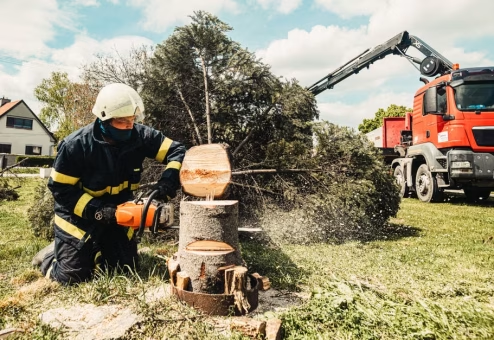
When disease has progressed too far, tree removal is the safest option to protect your property and neighboring trees. After removal, understand your stump options too. Read Why Stump Grinding Is a Must, because diseased stumps left in New Orleans soil can harbor fungi like Armillaria that spread to healthy nearby trees through underground root contact.
Understanding the full cost-benefit of when to treat versus remove is also helpful. See DIY vs Professional Tree Removal for an honest breakdown of what each approach involves, and 8 Benefits of Regular Tree Trimming for how proactive maintenance keeps New Orleans trees healthier year-round.
Big Easy Tree Cutting serves homeowners and property managers throughout the Greater New Orleans area, including Orleans, Jefferson, St. Bernard, and Plaquemines parishes. We offer free estimates for all tree disease evaluations. If you are unsure whether your tree is sick, stressed, or simply going through seasonal change, call us at (504) 732-9714 or visit our contact page to schedule your free assessment. Tree disease rarely waits, and neither should you.
The earliest signs are usually in the leaves: premature yellowing (chlorosis), unusual spots, or early leaf drop outside the normal season. In New Orleans, you may also notice sooty mold on leaves from insect infestations, or sunken cankers on the bark, both of which develop quickly in Louisiana’s warm, humid climate.
It depends on the disease and how far it has progressed. Some infections can be managed through improved soil conditions, dead wood removal, and fertilization. Others common to Louisiana, like hypoxylon canker and laurel wilt, have no cure, and removal is the only option once the tree is significantly infected.
Hypoxylon canker produces a distinctive silvery, powdery, or crusty gray coating on the outer bark after killing the sapwood underneath. The canopy above the affected area typically shows yellowing, reduced leaf size, and dieback. It is extremely common on stressed water oaks in New Orleans, particularly after drought periods or soil disturbance from construction or storm damage.
Yes. Fungal conks (shelf or bracket fungi growing from the trunk) signal that significant internal decay is already present inside the wood. A tree with conks, especially near the base, may be structurally compromised and at risk of falling, even if the canopy still looks partially healthy. In New Orleans, where large oaks overhang homes and streets, this is a serious safety concern that warrants an immediate arborist assessment.
At minimum, once a year, ideally in early spring before the peak growing season. After major storms, drought periods, or any significant construction near your trees, a follow-up inspection is important because these stress events dramatically increase disease susceptibility for New Orleans trees. If you spot any unusual symptoms at any time, contact Big Easy Tree Cutting rather than waiting for a scheduled visit.
 By Admin
  Jul 12, 2026