Call Us Now: 504-732-9714
Call Us Now: 504-732-9714

An hour of preparation before the crew arrives makes a tree removal faster, safer, and less likely to leave marks on your property. Most of it is simple: clear the access route, move what can be moved, secure pets, and tell your neighbors. This checklist walks through everything worth doing in the days and hours before removal day, plus the questions to settle with your contractor beforehand.
A tree crew arrives with a plan built around what they saw during the estimate. If a car is parked in the drop zone or a gate that was open is now padlocked, the plan changes on the spot, and changes made in the field are rarely improvements. They cost time, and sometimes they cost a flower bed.
The other reason is safety. Every object left in a work area is something a crew has to work around while managing heavy wood under load. A clear site lets people concentrate on the tree. If you are not sure what your crew needs, ask during scheduling, and Big Easy Tree Cutting will tell you exactly what to move.
Make sure the written estimate says which tree or trees are coming down, whether the stump is included, what happens to the wood, and whether chips are hauled away or left. Ambiguity here is the most common source of disagreement after the fact. Ask for the scope in writing rather than relying on a conversation.
Request a current certificate of insurance before work begins. A certificate shows that coverage was reported at a point in time and is not the policy itself, so if the job is large or close to a structure it is reasonable to verify with the issuing agency. Ask whether the company carries both liability and workers’ compensation coverage for the crew on your property.
Requirements vary by jurisdiction and by where the tree stands, and trees in a right of way or under a specific ordinance may be treated differently from those entirely on private property. Confirm current requirements with the applicable city or parish department, and settle who is responsible for obtaining any approvals. Our construction permitting service handles this for project work.
If the tree is near a property line, if crews may need access from an adjoining yard, or if there will be several hours of noise, tell your neighbors ahead of time. It costs nothing and prevents most of the friction that comes up on removal day.
Equipment has to get in and the wood has to get out. Walk the route yourself from the street to the tree and look at it the way a truck would.
If street parking near your house is limited, ask whether the crew needs a spot reserved. A cone or two put out the night before can save an hour of shuffling.

Everything within reach of the tree should be treated as being in the drop zone, and reach means further than most people estimate.
Move patio furniture, grills, planters, birdbaths, garden art, and children’s play equipment well clear. Take down anything hanging from the tree itself, including lights, swings, feeders, and hammock hardware. Remove or cover delicate landscape features that cannot be relocated, and flag irrigation heads, low-voltage lighting, and shallow drainage lines so the crew knows they are there.
Anything genuinely fragile deserves a direct conversation rather than a hope that it will be noticed. A crew can rig differently to protect a specific feature if they know it matters to you.
Keep children and pets indoors for the duration. Falling wood is loud and unpredictable, and a dog that slips into a work area creates a genuine emergency. If you work from home, expect noise from saws and the chipper for a good portion of the day and plan calls accordingly.
Stay off the site while cutting is underway. If you want to watch, do it from a window or from well outside the marked area. Being available by phone at the start and end of the job is more useful than standing nearby during it.
Heavy equipment on soft ground leaves ruts, and our soils stay wet. If the yard is saturated from recent rain, ask whether the job should be moved to a drier day. Reputable companies raise this themselves when conditions are bad.
Ask what the crew uses to spread the load, such as plywood or mats over turf and driveways. Point out any concrete you are protective of, since chip trucks are heavy and older driveways crack. Expect some impact regardless. Even a careful crew working in good conditions leaves a lawn that needs raking and a few weeks to recover.
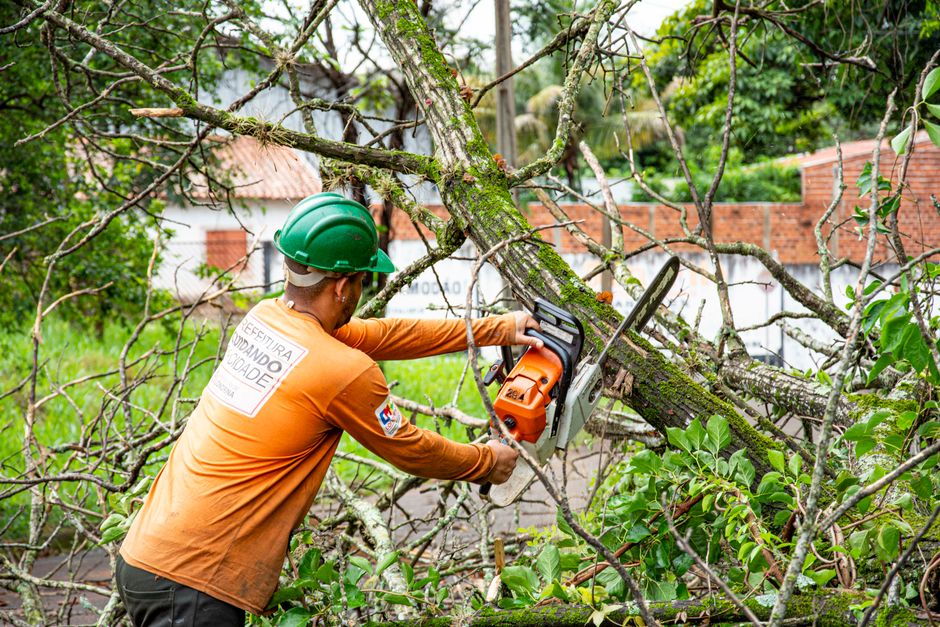
Walk the property with the crew leader before they pull away. Check that the debris level matches what the estimate described, look at the lawn and beds, and confirm what remains to be done if stump grinding is scheduled separately.
Give the yard a light rake, water any turf that took a beating, and hold off on reseeding until the ground has settled. If the stump was ground, our post on what happens to tree roots after a tree is removed covers what to do with the grindings and how to plant over the area. For timing expectations on the work itself, see how long tree removal takes.
We walk every property before the work is scheduled so you know exactly what to move and what to expect. Read what customers have said on our testimonials page, learn more about our team, and check the communities we cover on our service area page.
For tree removal, stump grinding, or tree trimming, contact Big Easy Tree Cutting or call 504-732-9714.
You do not usually need to be present the whole time, but being reachable is helpful. A short walkthrough at the start confirms the plan and anything that needs protecting, and one at the end lets you review the cleanup before the crew leaves. If you cannot be there, arrange for someone else to handle those two moments.
Further than feels necessary. Limbs bounce and roll when they land, and pieces can travel well beyond the point of impact. Ask the crew leader where the boundary is for your specific job rather than estimating, and move fragile items indoors or to another part of the property entirely.
Some impact is normal, particularly in wet conditions, and equipment weight is difficult to avoid entirely. Crews commonly use plywood or mats to spread the load over turf and driveways. If the ground is saturated, rescheduling for a drier day usually produces a better result than pushing ahead.
Yes, especially if the tree is near a shared line, if crews may need access from their side, or if the job will be noisy for several hours. A quick conversation a few days ahead prevents most complaints. If access across their property is genuinely needed, arrange it in advance rather than on the day.
A written scope covering which trees, whether the stump is included, and what happens to the wood and chips, along with a current certificate of insurance. A certificate reflects coverage reported at a point in time, so verify with the issuing agency if the job is large or close to a structure. Confirm who is responsible for any local approvals.
That depends on what you agree to in the estimate. Common options include hauling everything away, chipping brush and leaving the mulch on site, or cutting the trunk into rounds and leaving them for firewood. Decide before the day, since the answer affects how the crew stages the work and how many trips the truck makes.
 By Admin
  Aug 22, 2026