

Call Us Now: 504-732-9714
Call Us Now: 504-732-9714

Homemade and store-bought fertilizers can both work for trees, but neither one is automatically safe. University guidance says trees respond equally well to organic and chemical fertilizers, so the real questions are whether your tree needs feeding at all, which nutrient it lacks, and how much you apply. A soil test through your parish LSU AgCenter office is the safest place to start.
Before choosing between a compost pile and a bag from the store, check whether your tree is hungry. At Big Easy Tree Cutting, we start every fertilization question the same way, by looking at the tree. An LSU AgCenter horticulturist wrote that you can judge a healthy, mature tree by its spring growth: more than 6 inches of new twig growth means fertilizer is not needed, 2 to 6 inches means you may consider it, and less than 2 inches means fertilizing is recommended.
Leaves tell part of the story too. LSU AgCenter notes that abnormally small, pale, or yellowish leaves can point to a lack of nutrients, although poor color and growth can also come from transplanting, poor drainage, root disease, or mechanical damage to the trunk. If one of those is the real cause, fertilizer will not fix it. Our guide on how to spot tree disease can help you rule out other causes.
The same LSU article explains why urban trees are more likely to need feeding than trees in the woods. When we rake up fallen leaves, we remove the nutrients those leaves would have returned to the soil, and construction, compaction, and paved areas can lower fertility further.
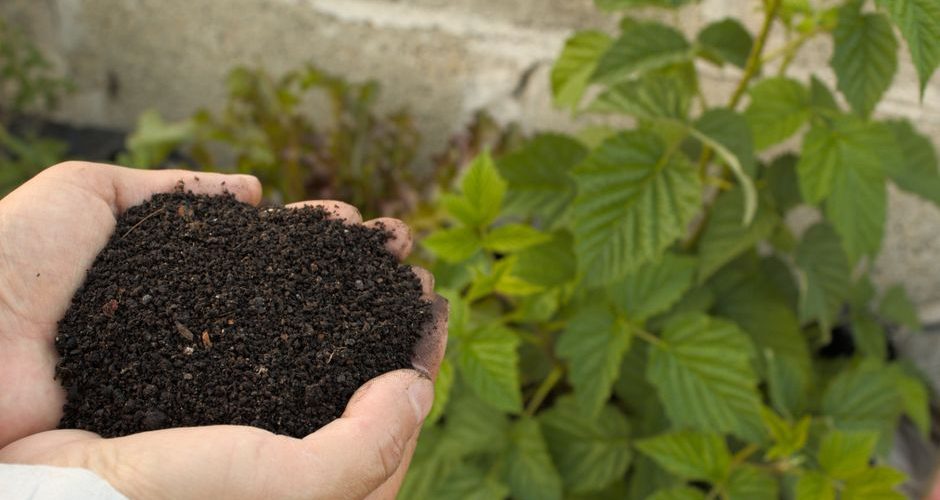
Homemade fertilizer covers a wide range of things. Some are well supported, and some are not.
One practical difference is speed. Oregon State notes that plants can absorb most chemical fertilizers as soon as they are applied, while soil bacteria and fungi must act on most organic fertilizers to turn them into a usable form. It also notes that chemical fertilizers contain higher concentrations of nutrients, so they require less volume to apply.
Epsom salt is magnesium sulfate, and it is one of the most popular homemade tree fixes. A University of Washington Miller Library Q&A, citing Washington State University horticulture professor Linda Chalker-Scott, treats the idea that it feeds plants and boosts growth as a myth. It says Epsom salt helps only where magnesium is known to be lacking, as in intensive crop production, and recommends against using it in home gardens.
If you suspect a magnesium or iron shortage, Oregon State advises that a soil test will show whether your soil lacks minor elements, and that a spray correction for iron or magnesium is best applied by a tree care professional.
The three numbers on a bag are the percentages of nitrogen, phosphorus, and potassium. Oregon State explains that nitrogen is generally the key nutrient for trees, because it stimulates new growth and keeps leaves green, while most soils already contain enough phosphorus and potassium. A soil test will show whether either is needed.
If you use a complete fertilizer, Oregon State suggests choosing one with roughly a 3-1-2 ratio of nitrogen, phosphorus, and potassium, with 10-4-6 and 20-5-10 as examples. Its guide also admits that scientists and arborists have not reached firm conclusions on the best type, timing, or amount, which is another reason local advice and a soil test matter more than any single rule.
An LSU AgCenter horticulturist called February an excellent time to fertilize trees, because most trees are beginning a growth phase and can use the nutrients right away. The same article says mature shade trees generally do not need fertilizer every year, and that applications made no more often than every three years are generally adequate. Oregon State’s guide, written for Oregon, favors late summer, fall, or early spring, so use Louisiana guidance when the two differ.
LSU AgCenter suggests that a local tree service may be a better choice for larger, older trees with extensive root systems. It also notes that when trees are damaged or in decline, fertilization can be an important part of a recovery program, alongside other care that deals with the underlying ca
 By Admin
 Oct 30, 2026