Call Us Now: 504-732-9714
Call Us Now: 504-732-9714

Cutting down a tree removes what you can see and leaves an entire root system in the ground. Those roots do not disappear on any quick schedule. They decay slowly, they can send up sprouts in some species, and they influence what you can plant in that spot for years afterward. Here is what actually happens underground after a removal, and what you can do about it.
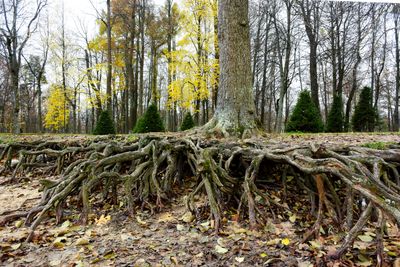
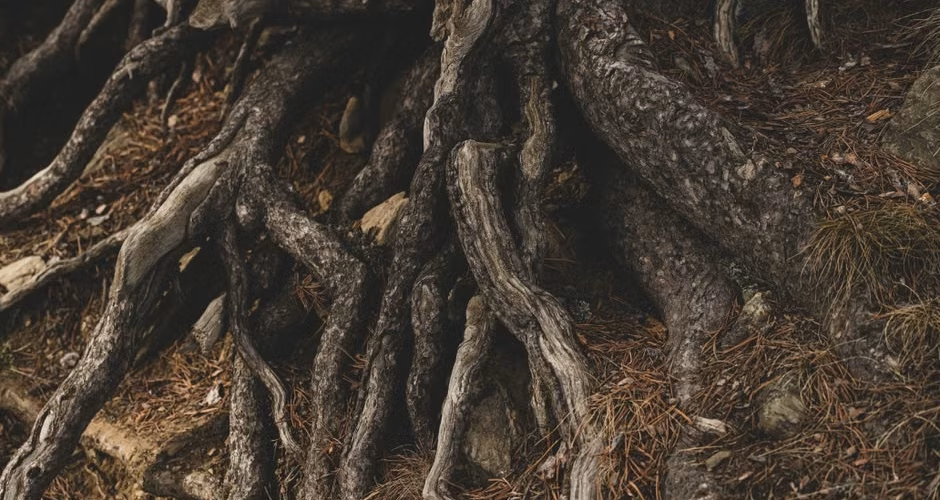
The common mental picture of roots mirroring the canopy underground is wrong. Most of a tree’s root mass sits in the top foot or two of soil and spreads outward well beyond the drip line, often considerably farther than the branches reached. In the heavy, poorly drained soils common around New Orleans, roots stay shallow and spread wider still because oxygen is scarce deeper down.
That matters after a removal because the visible stump represents a small fraction of what remains. Structural roots radiate from the base, and fine feeder roots extend far past the area anyone thinks to look at. Understanding this makes the rest of the process easier to plan for, and Big Easy Tree Cutting can explain what to expect on your specific site.
Once the trunk is gone, the roots lose their supply of sugars from photosynthesis. Most root systems begin dying back fairly quickly because they cannot manufacture food on their own. Fungi and bacteria in the soil start colonizing the dead tissue, and the slow work of decomposition begins.
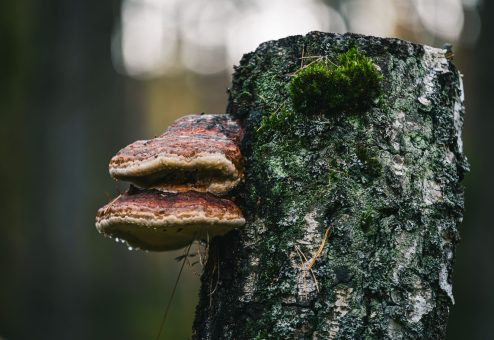
The visible signs are subtle. Soil above larger roots may settle over time as the wood breaks down and the volume it occupied collapses. Mushrooms sometimes appear in a rough line following the path of a decaying root, which alarms homeowners but is simply the fungi doing their job. These fungi are generally decomposers of dead wood rather than a threat to living trees nearby, though it is worth having anything unusual looked at.
There is no fixed timetable, and any specific number should be treated skeptically. Decomposition rate depends on the species and wood density, the diameter of the roots, soil moisture and temperature, drainage, and the microbial life present in that particular soil.
In broad terms, fine feeder roots break down relatively quickly, while large structural roots take considerably longer, often measured in years rather than months. Warm, moist conditions speed the process, and our climate is generally favorable to decomposition. Dense hardwood roots persist longer than those of softer, faster-growing species. If you need the area usable sooner than nature allows, that is what grinding and excavation are for.
Not every species accepts removal quietly. Some trees respond to the loss of their canopy by pushing dormant buds on the stump or on surface roots, producing a ring of shoots that can reappear season after season.
Chinese tallow is a persistent offender in our area, and several other fast-growing species behave the same way. Suckers that emerge from roots rather than from the stump itself are the harder problem, because grinding the stump does not remove the roots that are producing them. Repeated cutting eventually exhausts the reserves stored in the root system, though it can take multiple seasons. Where sprouting is aggressive, a targeted treatment applied by a qualified professional may be appropriate.
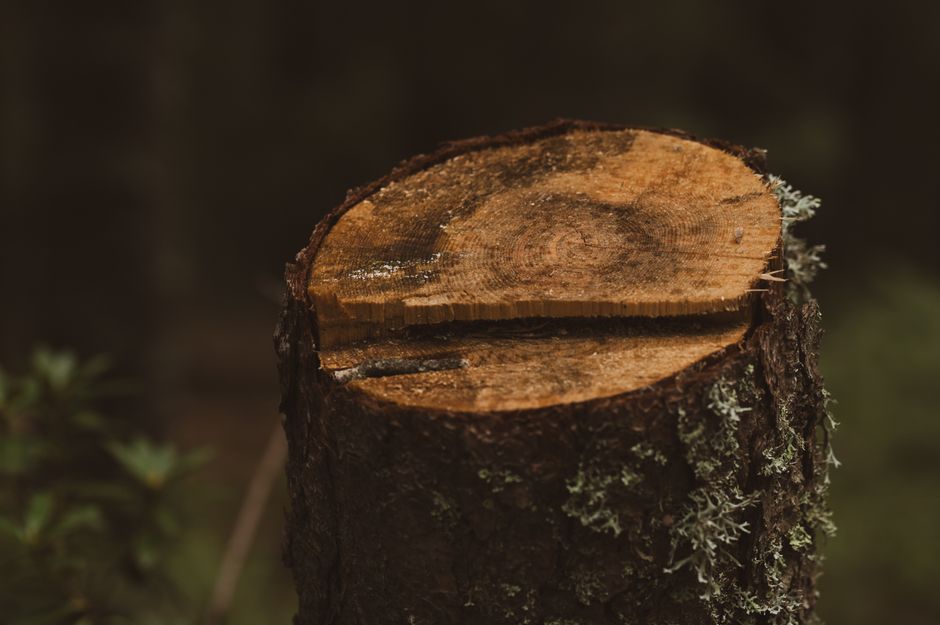
Grinding uses a rotating wheel with cutting teeth to chew the stump down below grade, typically taking the immediate root flare with it. That is enough to let you plant grass, install a bed, or run a mower over the spot without hitting anything.
What grinding does not do is remove the wider lateral root system. Those roots stay in the ground and decay on their own schedule. For most purposes that is fine, because they are below the surface and no longer growing. It becomes relevant when you plan to build on the spot, install a pool, or plant a large replacement tree in exactly the same location. Our comparison of stump grinding versus full stump removal explains when the more invasive option is justified, and our stump grinding service covers the standard approach.
The ground where a tree stood is not ideal planting soil right away. Grinding leaves a mix of wood chips and soil in the hole, and as those chips decompose the microbes doing the work draw nitrogen from the surrounding soil. New plantings in that spot can look pale and grow slowly as a result.
A practical approach looks like this.
Where a replacement tree needs help establishing in disturbed soil, deep root fertilization can support early growth. Give the area a season before judging how it is going to perform.
In most cases, no. The organisms that decompose dead roots are generally saprophytic, meaning they feed on dead tissue rather than attacking living trees. Their presence in your yard is normal and usually harmless.
The exception worth knowing about is when the original tree was removed because of a root or butt rot pathogen. Some of these organisms persist in dead root material and can move to adjacent trees through root contact. If your tree was removed for disease rather than for structure or location, mention that when planning replacement planting, and consider having nearby trees assessed. Our post on how to spot tree disease covers the warning signs.
Removal is not really finished at ground level. Deciding what happens to the stump, the grindings, and the space afterward is part of the same project, and it is easier to plan up front than to revisit later. Our guide to how long tree removal takes covers scheduling, and our post on tree removal and property value covers why finishing the job matters.
We handle tree removal and follow-up grinding throughout the communities on our service area page. Contact Big Easy Tree Cutting or call 504-732-9714 to talk through your site.
Generally no. Without a canopy the roots lose their supply of sugars and cannot sustain new growth, so the system begins dying back. The exception is species that push shoots from the stump or surface roots, which can keep a portion of the root system alive as long as those shoots produce leaves. Removing the sprouts repeatedly is what eventually exhausts the reserves.
It varies enough that a single figure would be misleading. Fine roots break down relatively quickly while large structural roots commonly take years, and the rate depends on species, root diameter, soil moisture, drainage, temperature, and the microbes present. Warm, damp conditions speed the process considerably compared with dry or cold soils.
No. Grinding removes the stump and the immediate root flare below grade, which is enough for planting grass or a bed and for mowing over the spot. The wider lateral roots remain in the ground and decompose on their own. Full root excavation is a larger and more disruptive operation reserved for construction or major landscape changes.
Waiting is usually better, and offsetting the new tree several feet from the original trunk position helps more. The mix of wood chips left behind ties up nitrogen as it decomposes, and remaining roots make digging a proper planting hole difficult. Removing the grindings and backfilling with quality topsoil improves the odds considerably.
They are usually decay fungi fruiting on the dead root material, which is a normal part of decomposition rather than a sign of a new problem. They tend to appear after wet weather and often follow the line of a buried root. If the tree was removed because of a root disease, it is worth having nearby trees looked at rather than assuming the fungi are harmless.
Roots that are no longer growing do not extend into new areas, so the risk of new intrusion generally ends with the tree. Existing damage does not repair itself, and settling as large roots decay can occasionally show up at the surface. If you had root-related plumbing or hardscape issues before the removal, have those inspected on their own terms.
 By Admin
  Aug 18, 2026