

Call Us Now: 504-732-9714
Call Us Now: 504-732-9714

When a storm brings a tree down in Louisiana, the first hour matters. Downed conductors, unstable limbs still hanging in the canopy, and trunks resting on a roof all carry risks that are easy to underestimate from the ground. This guide covers what to do first, who to call in what order, how to document damage for an insurance claim, and how emergency tree removal differs from a scheduled job.
Not every storm-damaged tree needs an overnight crew. Emergency response is warranted when a tree or limb has struck a structure, is resting on or near power lines, is blocking the only access to a property, or is hung up in another tree where it could drop without warning. A limb on the lawn with nothing underneath it can generally wait for a scheduled visit.
The distinction matters because emergency work is performed under worse conditions, often at night, sometimes in wind and rain, and with less time to plan the rigging. Reserving it for genuine hazards keeps crews available for the properties that need them most. Big Easy Tree Cutting handles both, and part of the initial call is sorting out which category your situation falls into.
Work through these steps in order before anyone goes near the tree.
Storm-damaged wood behaves differently from a standing tree. Trunks and limbs under bending load store energy, and a cut in the wrong place releases it violently. This is the single most common way homeowners are injured during storm cleanup.
If anyone is injured, if you smell gas, or if there is fire, call 911 first. Nothing else on this list comes before that.
Report downed or damaged power lines to your electric utility before calling a tree service. Tree crews are generally not permitted to work near energized conductors, and the utility has to de-energize or clear the line before removal can begin. Reporting early also puts your address in the restoration queue.
Once the site is safe to approach, call a tree service that handles emergency work. Describe what the tree is resting on, whether wires are involved, and whether the crew can reach the tree with equipment. That detail lets the company send the right gear rather than making two trips.
Report the damage promptly and ask what your policy requires before cleanup begins. Some policies expect notice before non-emergency work starts, and coverage depends on your specific policy terms. Reasonable steps to prevent further damage, such as tarping an opening, are usually appropriate to take right away, though you should confirm this with your insurer.
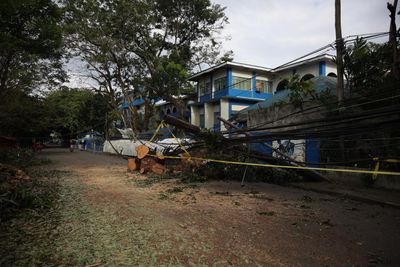
Photographs taken before anything is moved are worth more than any description written later. Capture wide shots that establish the whole scene, then move in for detail on the point of impact. Include the base of the tree, the failure surface, and anything the tree struck on its way down.
Keep every receipt, including the emergency call, tarps, and temporary lodging if the home is not habitable. Ask your tree service for an itemized invoice that separates emergency response from cleanup and disposal, since insurers often treat those line items differently. Whether any of it is reimbursed depends on your policy, the cause of loss, and your deductible, so confirm the specifics with your insurer rather than assuming.
A crew arriving at a storm call starts with an assessment rather than a saw. They identify what is holding the tree in place, where the load is, and what will move when the first cut is made. On a tree resting against a house, that usually means securing the trunk with rigging so nothing shifts toward the structure.
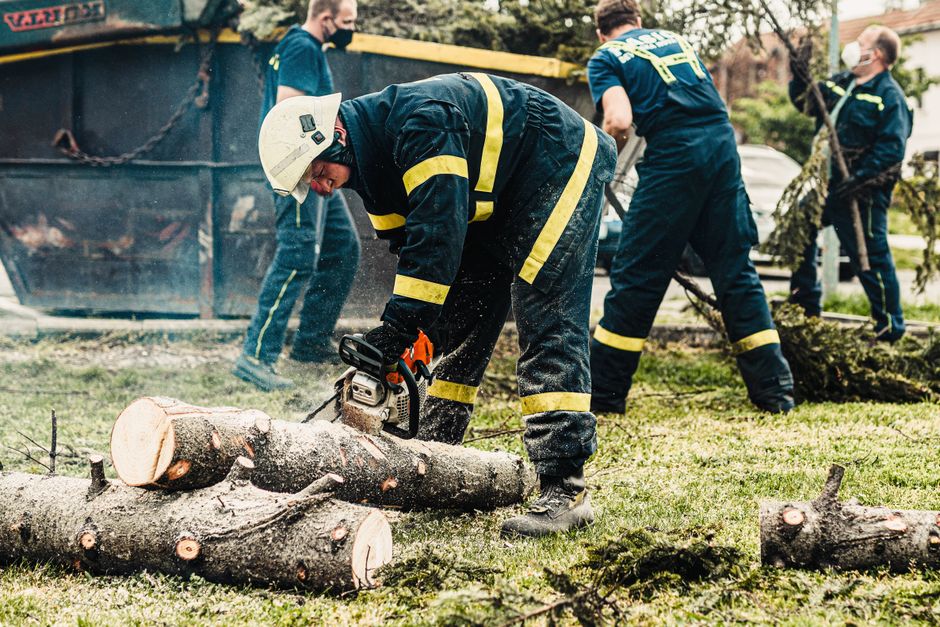
From there the tree comes apart in pieces, working from the top down or from the free end back toward the load. Sections are lowered on ropes rather than dropped when there is anything underneath worth protecting. Where a crane or lift can reach, larger pieces can be picked and set down clear of the house, which is faster and puts less shock into the structure.
Once the hazard is neutralized, the pace changes. Cleanup, chipping, and hauling are ordinary work and are often scheduled for a follow-up visit so the crew can move on to the next emergency. If the tree came out of the ground entirely, stump grinding is typically handled separately once the site has dried out.
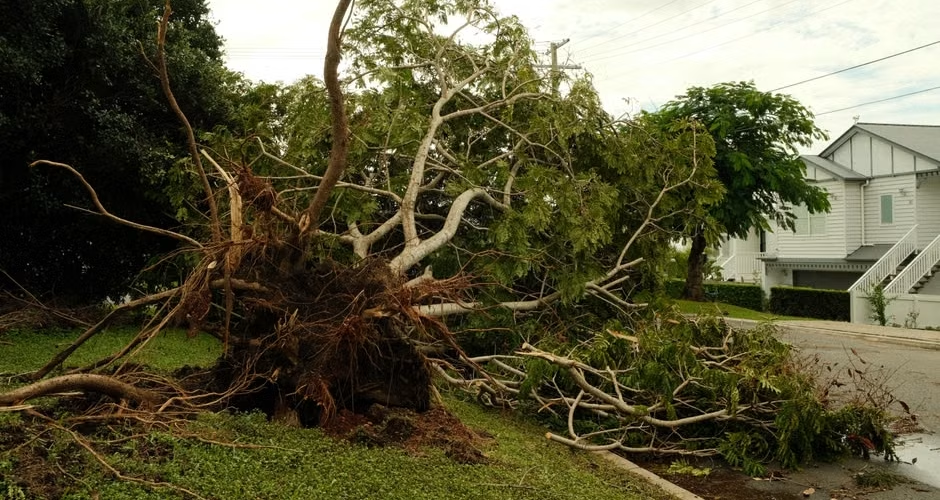
Our storms produce a distinct pattern of damage. Sustained wind loads a canopy for hours rather than seconds, and the ground is usually saturated by the time the strongest gusts arrive. Wet s
 By Admin
 Aug 4, 2026